Chart
Cursive lowercase letters
Cursive lowercase letters fall into a few families that share one motion: oval letters (a, c, d, g, o, q), tall loop letters (b, e, f, h, k, l), hump letters (m, n, v, x, y, z), and short upstroke letters (i, j, p, r, s, t, u, w). Learning them by family is faster than learning them A to z.
Chart
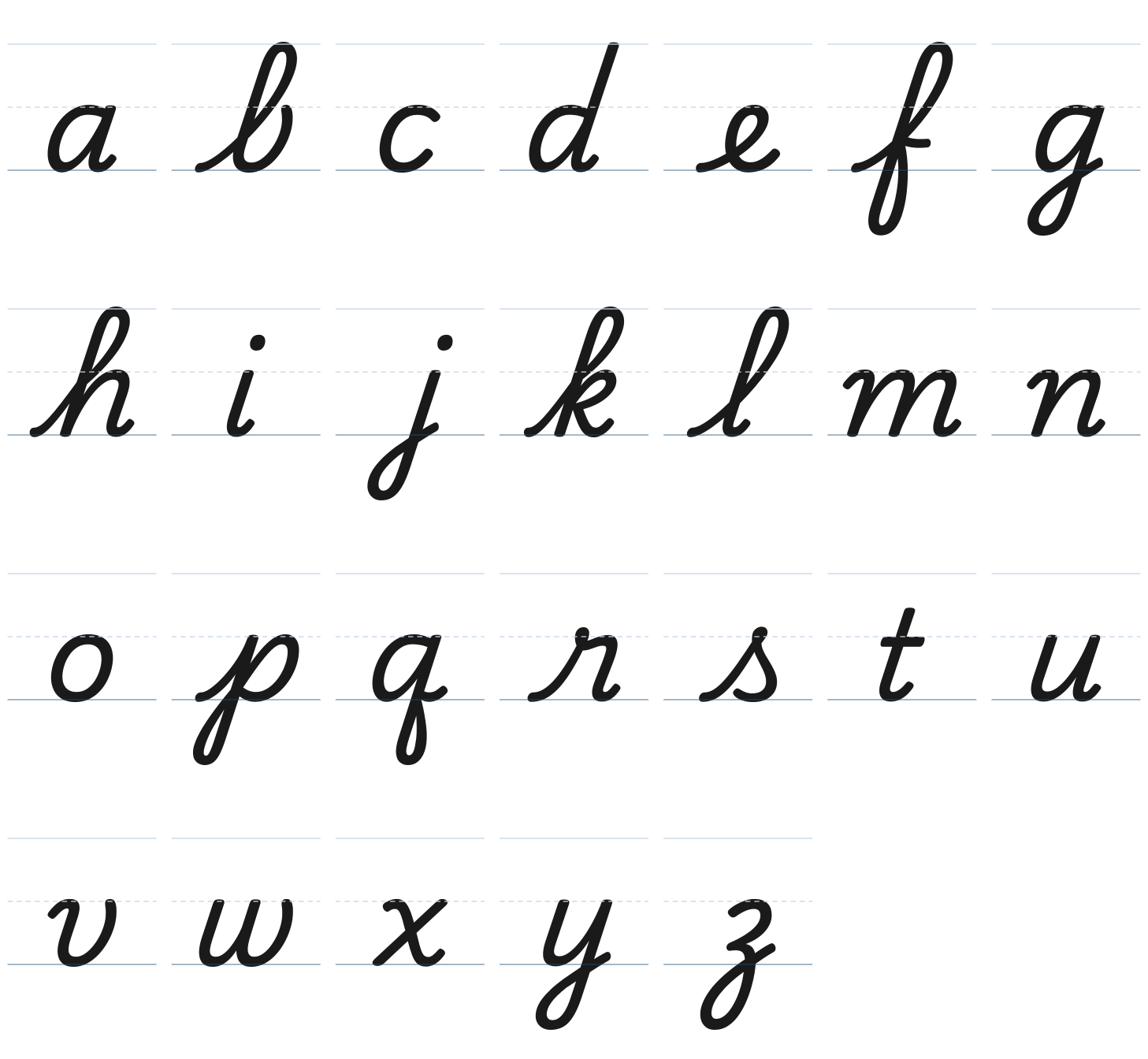
Cursive lowercase a to z.
Tall, short, and tails
On the chart, b, d, f, h, k, l, and t reach above the midline. The tall loops of b, f, h, k, and l touch the headline. Seven letters hang a tail below the baseline: f, g, j, p, q, y, and z all dip under it, and their tails loop back up to join the next letter. Everything else stays between the baseline and the midline.
The four letters that change most from print
Questions
Which lowercase cursive letters should you learn first?
Start with c, a, d, g, o, and q. They all begin with the same counterclockwise oval, so one motion unlocks six letters.
Why do lowercase letters look different inside a word?
Inside a word each letter picks up a joining stroke from the letter before it. The chart shows each letter on its own, the way it looks at the start of a word.