Cursive letters / D
Cursive D: capital and lowercase d
To write cursive D, slant a stem from just under the headline to the baseline, curl a small loop at the bottom, then swing a wide bowl up to the headline and over, ending left of the stem. Lowercase d is an oval started at the midline, pulled counterclockwise, with a straight stem from the headline down to the baseline.
Specimen
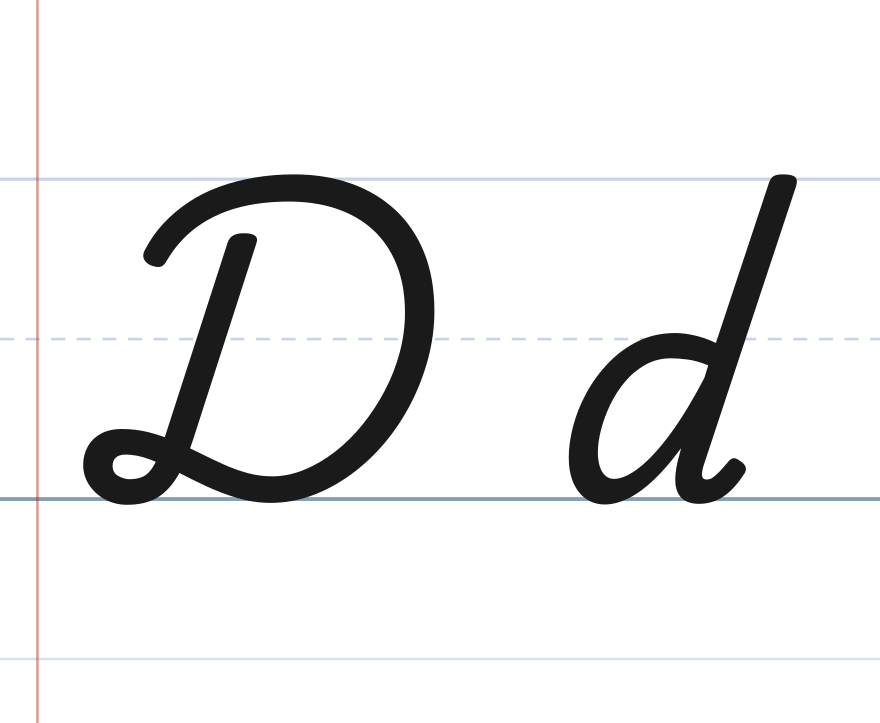
Capital D and lowercase d in traditional school cursive.
Copy and paste cursive D
Paste-ready script letters for a bio, caption, or text: 𝒟 𝒹 𝓓 𝓭. More looks in the cursive generator.
Copy box
Script
𝒟𝒹
Bold script
𝓓𝓭
Italic
𝐷𝑑
Bold italic
𝑫𝒅
This is Unicode text, not a handwriting font. It will look different in every app.
Write
How to write D in cursive
Capital D

Watch the pen. Each number appears where its step starts; the steps below match.
Capital D, step by step
- Start a little below the headline and slant a straight stem down to the baseline.
- At the bottom, curl left into a small closed loop on the baseline, then swing right along the baseline.
- Carry the curve up the right side to the headline and over the top.
- Come back down to the left and end with a short tail just left of the top of the stem. No join to the next letter.
The whole capital D in one read
Capital D starts with the stem. Put the pencil a little below the headline and slant straight down to the baseline. At the bottom, curl left into a small closed loop that sits on the baseline, then swing right along the baseline in a long curve. Carry that curve up the right side to the headline, over the top, and back down to the left, finishing with a short tail just left of the top of the stem. The bowl arcs above the top of the stem and ends to its left without touching it. The capital does not join the next letter.
Lowercase d

Watch the pen. Each number appears where its step starts; the steps below match.
Lowercase d, step by step
- Start just under the midline at the top right of the oval. There is no lead-in from the baseline.
- Pull left, down to the baseline, and back up counterclockwise to close the oval.
- Keep going straight up to the headline.
- Retrace the stem down the right side of the oval to the baseline and finish with a short upturn.
The whole lowercase d in one read
Lowercase d starts like a. Begin just under the midline at the top right of the oval, with no lead-in from the baseline, and pull left, down to the baseline, and back up counterclockwise to close the oval. Keep going straight up past the midline to the headline. Then come back down the same line, along the right side of the oval, to the baseline. The stem is a single straight stroke with no loop in it. Finish with a short upturn to the right, which joins the next letter.
Zaner-Bloser vs D’Nealian
Join
Joining d to other letters
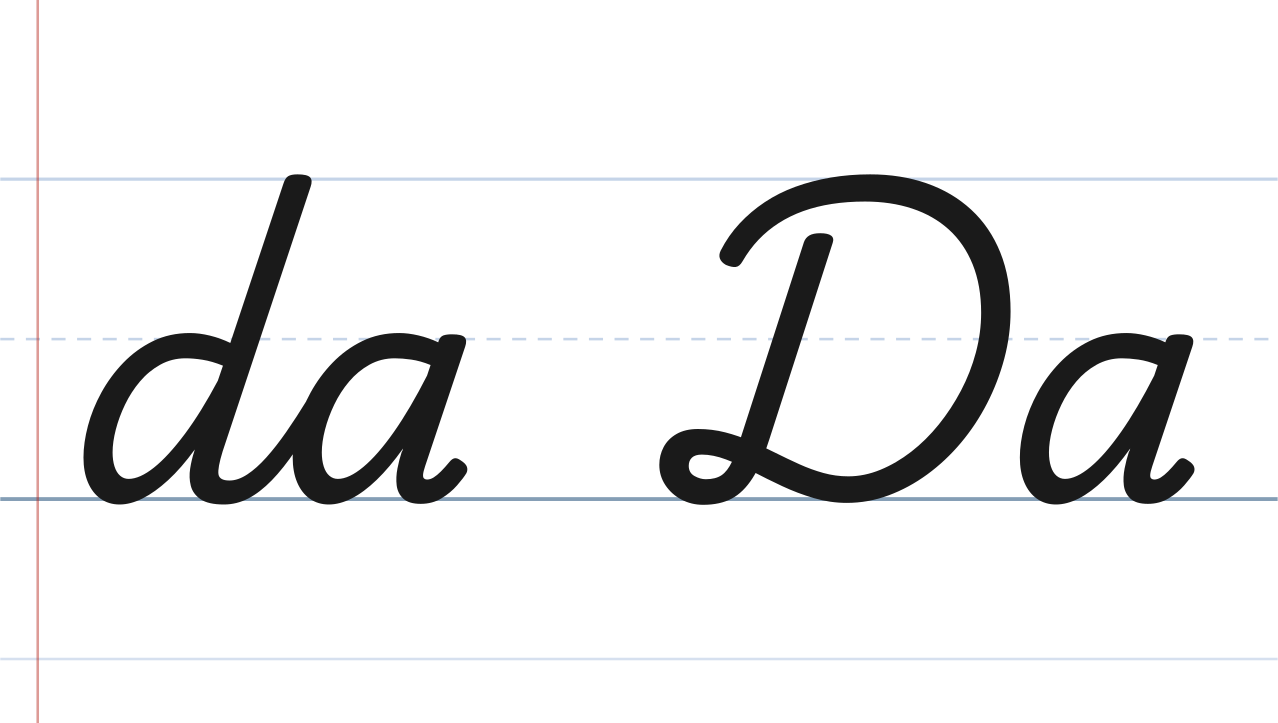
d into a
d's upturn is short and ends low, so it touches a's oval near the bottom left instead of climbing to the midline. Draw a's oval from its top, counterclockwise, and then its stem, which stops at the midline. Side by side, the two letters are the same oval with different stems: d's stem runs to the headline, and a's stays level with its oval.
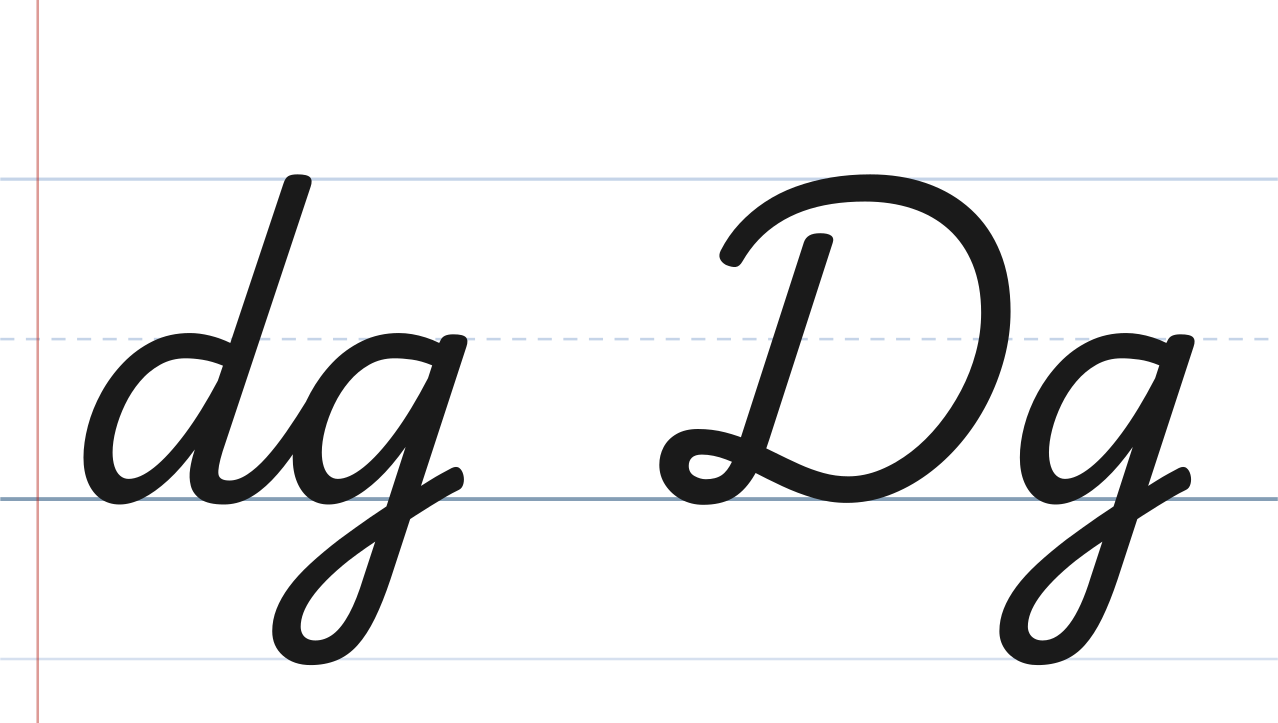
d into g
d's upturn meets the lower left of g's oval, the same way it meets a. The difference comes after the oval: g's stem does not stop at the baseline. It runs down to the descender line, turns left into a loop, and climbs back up to cross the stem at the baseline, ending in an upturn to the right. In dg, one stem rises above the line and the other hangs below it.
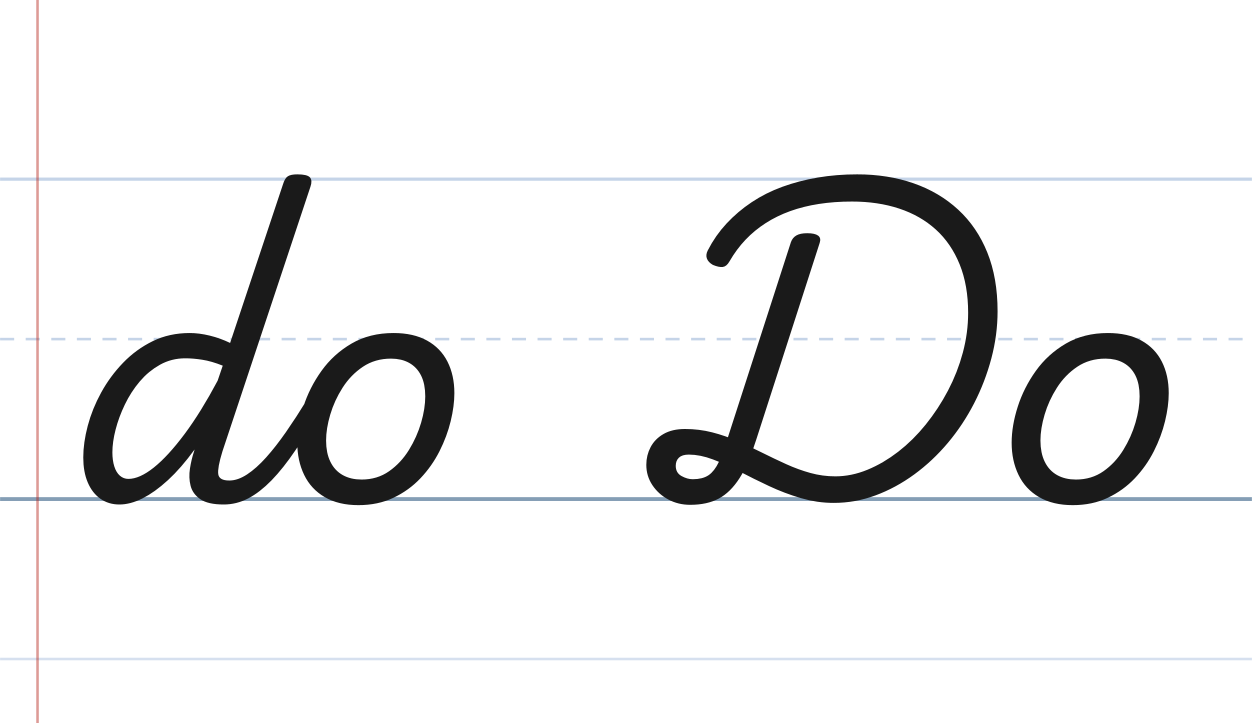
d into o
o is a round, closed oval with no stem at all. d's upturn touches its lower left, and o is drawn from the top, counterclockwise, closing where it began. Because o has nothing on its right side, do is the pair where d's tall stem stands out most. Keep o's oval as tall as d's oval so both sit between the baseline and the midline.
Watch for
Common cursive d mistakes
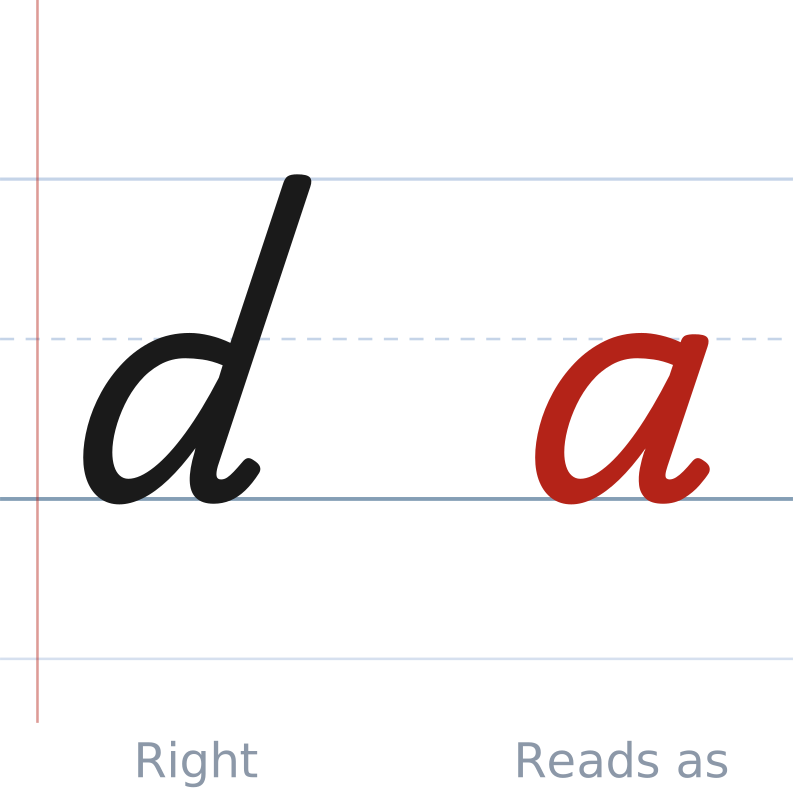
A short stem turns d into a
The oval of d and the oval of a are the same. The only difference is how high the stem goes. Stop at the midline and d becomes a, so dad reads as aaa. Push the stem all the way to the headline, then come back down the same line to the baseline before you make the upturn.
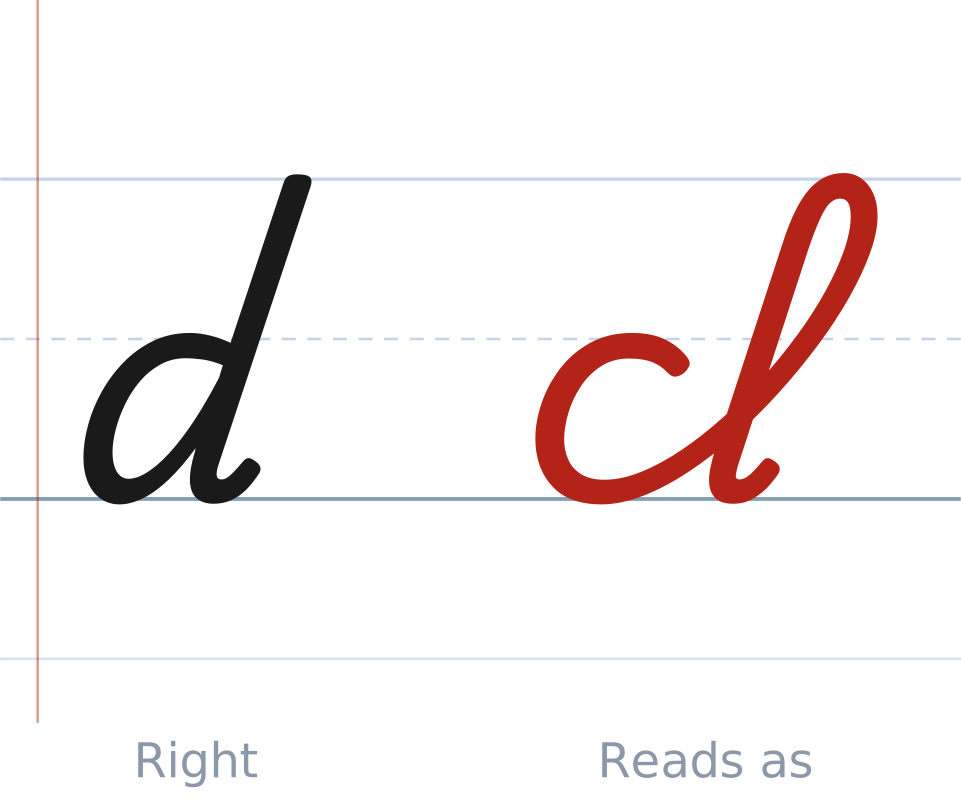
An open oval and a loose stem read as cl
If the oval is left open, or the stem stands apart from its right side, d reads as c followed by l, and did turns into something like clicl. Close the oval at the midline, go straight up from that same spot, and retrace the stem down along the oval's right side so the two parts share one line.
A capital D written as a big lowercase d
The capital D in this style is not a tall copy of lowercase d. It is a stem with a small loop at the baseline and a wide bowl that comes back over the top. An oval with a tall stem at capital size just makes a large lowercase d, and a name like Dan will look as if it starts with a small letter.
Free cursive D worksheet
Sheets use Playwrite US Trad, a traditional US school cursive.
Free, no sign-up. The PDF builds in this browser.
Practicing more than one letter? Get all 26 in the Complete Cursive Workbook, $9.
Cursive D questions
How do you write a capital D in cursive?
Capital D starts with the stem. Put the pencil a little below the headline and slant straight down to the baseline. At the bottom, curl left into a small closed loop that sits on the baseline, then swing right along the baseline in a long curve.
How do you write a lowercase d in cursive?
Lowercase d starts like a. Begin just under the midline at the top right of the oval, with no lead-in from the baseline, and pull left, down to the baseline, and back up counterclockwise to close the oval. Keep going straight up past the midline to the headline.
Does cursive capital D connect to the next letter?
No. Capital D ends on its own, so lift the pen and start the next letter with its normal entry stroke.
What is the most common mistake with cursive d?
A short stem turns d into a. The oval of d and the oval of a are the same. The only difference is how high the stem goes.
Can I copy and paste a cursive D?
Yes. The copy box on this page gives you Unicode script letters (Dd) that paste into bios, captions, and messages. They look like cursive but are a font-style symbol, not handwriting. For a printed sheet, use the free D worksheet on this page.
Is cursive d the same in Zaner-Bloser and D’Nealian?
Lowercase d: Zaner-Bloser starts on the oval with no baseline entry. D'Nealian adds a baseline entry stroke. The oval and stem are otherwise nearly the same.