Cursive letters / J
Cursive J: capital and lowercase j
Capital cursive J starts on the left below the midline, curves up and over the headline, and slants down below the baseline into a loop that swings left, crosses at the baseline, and exits right into the next letter. Lowercase j slants from the midline to the descender line, loops left, exits right, and gets a dot.
Specimen
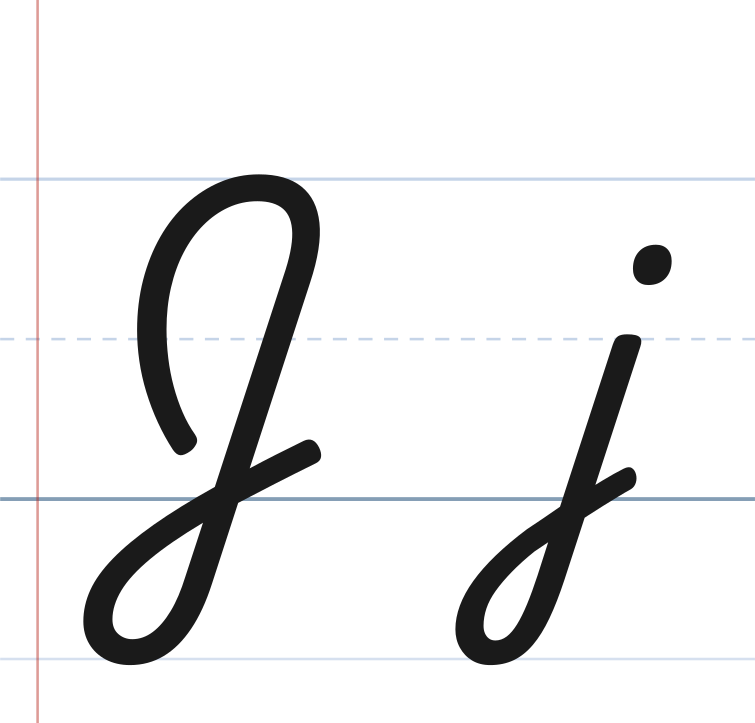
Capital J and lowercase j in traditional school cursive.
Copy and paste cursive J
Paste-ready script letters for a bio, caption, or text: 𝒥 𝒿 𝓙 𝓳. More looks in the cursive generator.
Copy box
Script
𝒥𝒿
Bold script
𝓙𝓳
Italic
𝐽𝑗
Bold italic
𝑱𝒋
This is Unicode text, not a handwriting font. It will look different in every app.
Write
How to write J in cursive
Capital J

Watch the pen. Each number appears where its step starts; the steps below match.
Capital J, step by step
- Start on the left, a little below halfway between the baseline and the midline. Curve up to the headline and turn right over the top.
- Slant straight down through the middle, past the baseline, to the descender line.
- Loop left, come back up, and cross the stem at the baseline.
- Exit up to the right and connect to the next letter.
The whole capital J in one read
Capital J is one continuous stroke that uses all three spaces. Start on the left, a little below halfway between the baseline and the midline, and curve up and slightly back to the headline. Turn right over the top and slant straight down through the middle of the letter, past the baseline, to the descender line. Loop left at the bottom and come back up, crossing the stem right at the baseline. Keep that exit rising to the right. This capital connects: in a name like Jo or Jan, the exit runs straight into the first lowercase letter. The top stays open, since the starting end never touches the stem.
Lowercase j

Watch the pen. Each number appears where its step starts; the steps below match.
Lowercase j, step by step
- Start at the midline and slant straight down through the baseline to the descender line.
- Loop left at the bottom and cross the stem just under the baseline.
- Exit up to the right.
- Lift and dot above the stroke, about halfway between the midline and the headline.
The whole lowercase j in one read
Lowercase j starts at the midline and slants straight down through the baseline to the descender line. Loop left at the bottom and swing back up to the right, crossing the stem just under the baseline. Keep rising to exit. Written alone, the exit is a short tail, but in a word it runs into the next letter. Lift and place the dot above the stroke, about halfway between the midline and the headline. Like i, j has no lead-in in the letter as shown. At the start of a word, many classrooms add a short upstroke from the baseline to the midline.
Join
Joining j to other letters
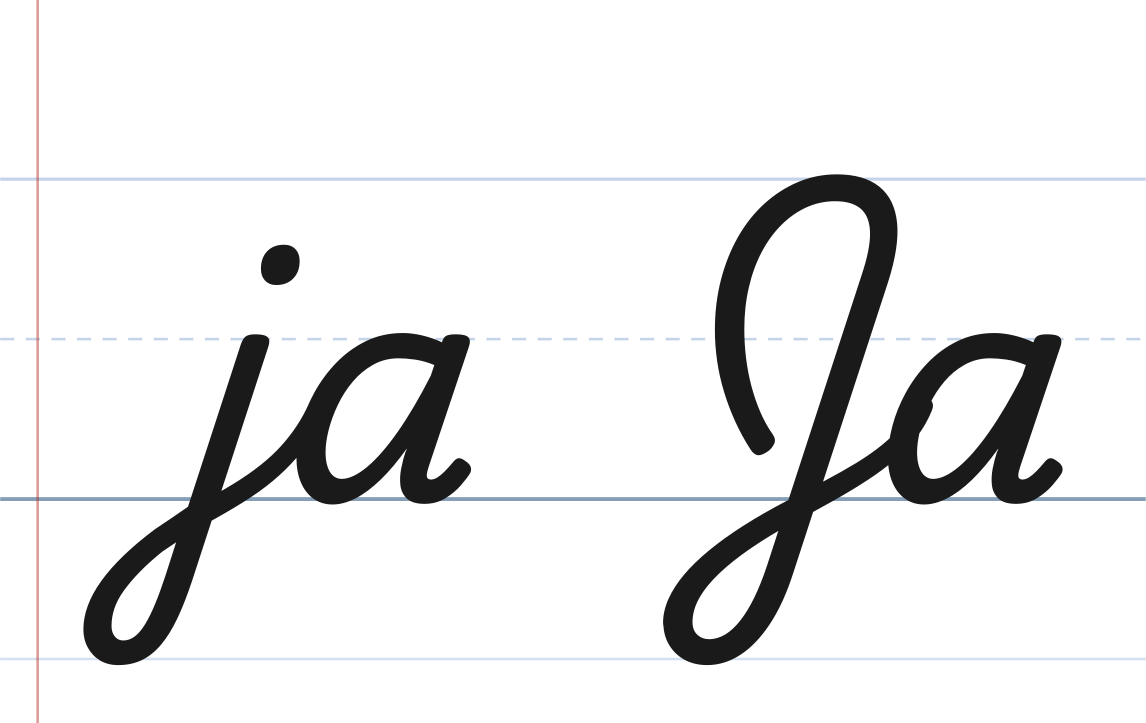
j into a
In ja, the exit from j's lower loop climbs from just under the baseline and runs into the left side of a's oval. The a then closes at the midline, pulls its stem down the right side, and stops on the baseline with an upturn. Only one stem in ja goes below the line. The only dot belongs over j, so do not let it drift to the right above the a.
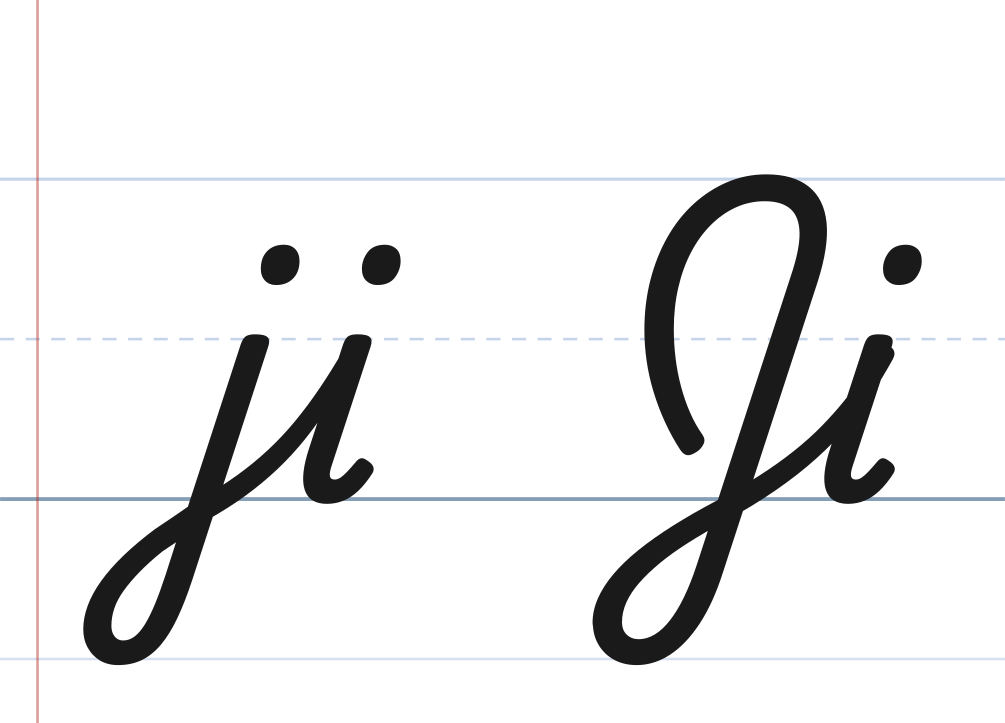
j into i
ji is two dotted letters in a row. j's exit climbs all the way to the midline, and i's stroke comes straight back down from that point to the baseline, ending in a small upturn. The two short strokes lean at the same slant, so they look like a pair. Dot both, each one right above its own stroke. Let i's stroke slip under the baseline and ji turns into jj.
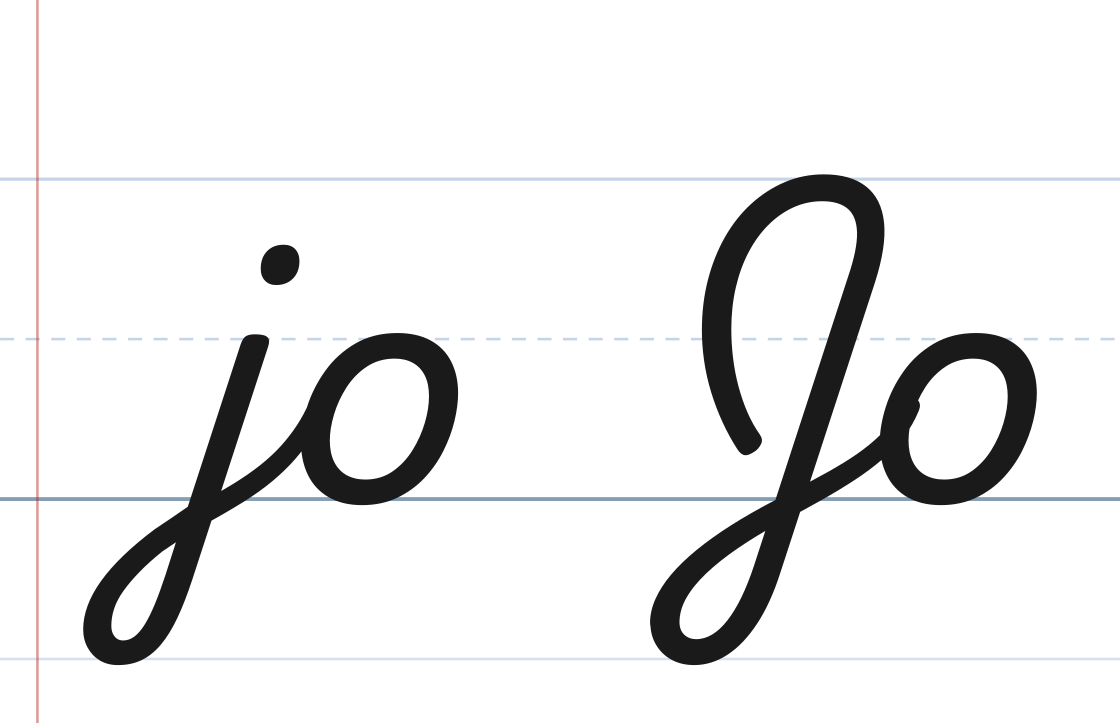
j into o
The exit from j rises into the lower left of o, so the oval seems to grow out of j's crossing point. The o goes around and closes at the top on the midline, with no stem. There is one dot, over j. If you pull a line down the right side of the oval, jo becomes ja. If you drop that line below the baseline, it becomes jg.
Watch for
Common cursive j mistakes
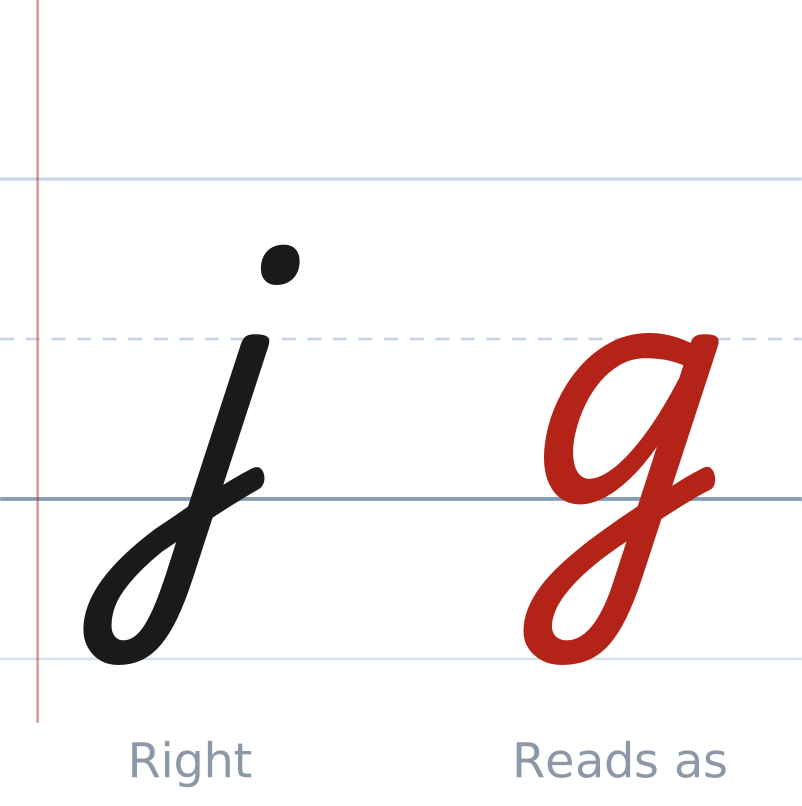
A round top turns j into g
j and g end the same way, with a straight stem to the descender line and a loop that swings left. The difference is on top. g has a closed oval. j has only a single slanted stroke and a dot. If you add a round top before the stem, or let the dot grow into a small circle joined to the stroke, j turns into g, and jam reads as gam.
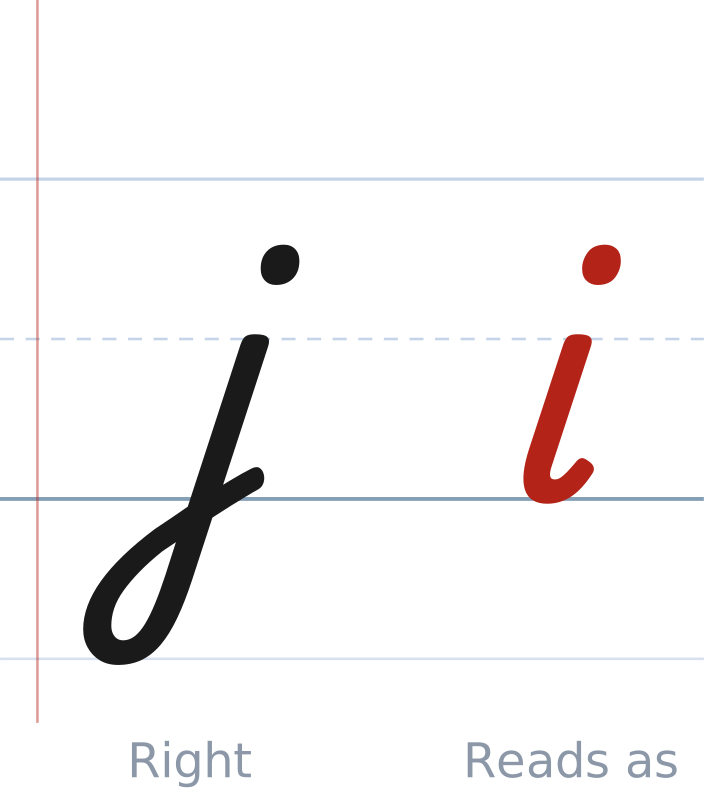
Stopping at the baseline turns j into i
Lowercase j is i with a tail. Both start at the midline, both slant down, and both get a dot. The only difference is where the stroke stops. i turns up at the baseline. j goes on through the line to the descender line and loops back. If the stroke stops at the baseline, jog reads as iog. Make the part below the line at least as long as the part above it.
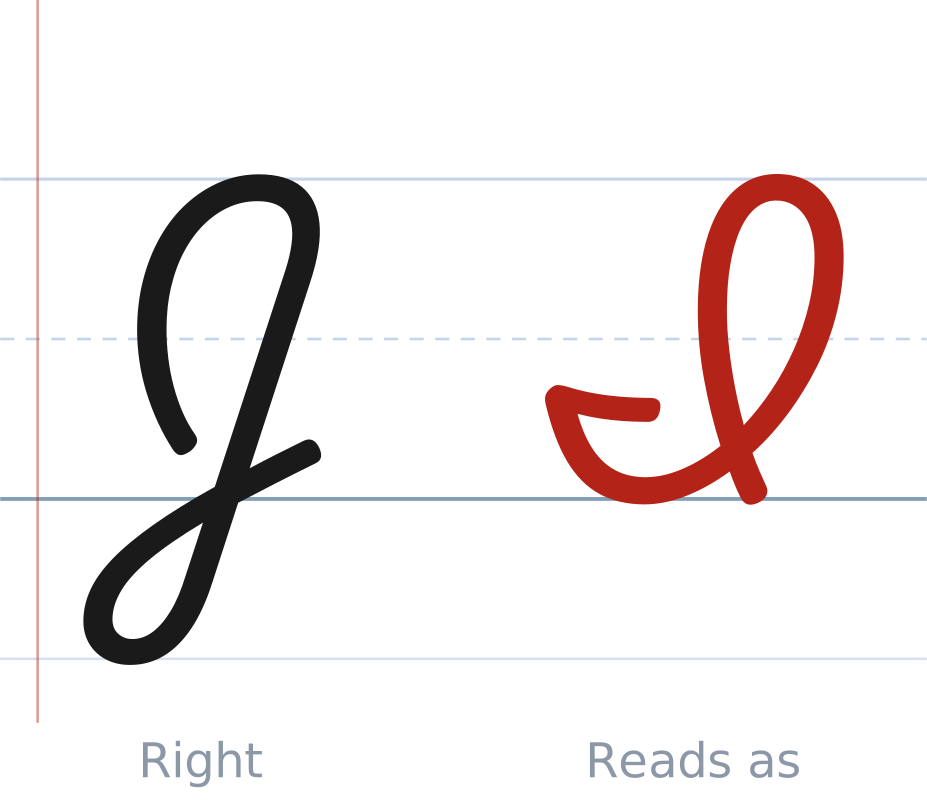
Capital J that stops short reads as I
Capital I and capital J both have a tall rounded top. The difference is below the baseline. J drops through the line into a loop and then joins the next letter. I stops right on the baseline and does not join. If your J stops short, Jan reads as Ian. And if you lift after J, you lose the join this capital is built to make.
Free cursive J worksheet
Sheets use Playwrite US Trad, a traditional US school cursive.
Free, no sign-up. The PDF builds in this browser.
Practicing more than one letter? Get all 26 in the Complete Cursive Workbook, $9.
Cursive J questions
How do you write a capital J in cursive?
Capital J is one continuous stroke that uses all three spaces. Start on the left, a little below halfway between the baseline and the midline, and curve up and slightly back to the headline. Turn right over the top and slant straight down through the middle of the letter, past the baseline, to the descender line.
How do you write a lowercase j in cursive?
Lowercase j starts at the midline and slants straight down through the baseline to the descender line. Loop left at the bottom and swing back up to the right, crossing the stem just under the baseline. Keep rising to exit.
Does cursive capital J connect to the next letter?
Yes. In traditional cursive the capital J carries its last stroke into the next lowercase letter, so a word like "Just" is written without lifting after the capital.
What is the most common mistake with cursive j?
A round top turns j into g. j and g end the same way, with a straight stem to the descender line and a loop that swings left. The difference is on top.
Can I copy and paste a cursive J?
Yes. The copy box on this page gives you Unicode script letters (Jj) that paste into bios, captions, and messages. They look like cursive but are a font-style symbol, not handwriting. For a printed sheet, use the free J worksheet on this page.