Cursive letters / U
Cursive U: capital and lowercase u
Capital cursive U starts just below the headline with a small hook, slants down to the baseline, rounds the bottom, and climbs to the headline. Then it retraces straight down the right side and joins the next letter. Lowercase u starts at the midline, makes two rounded valleys on the baseline, and ends with a short upward exit stroke.
Specimen
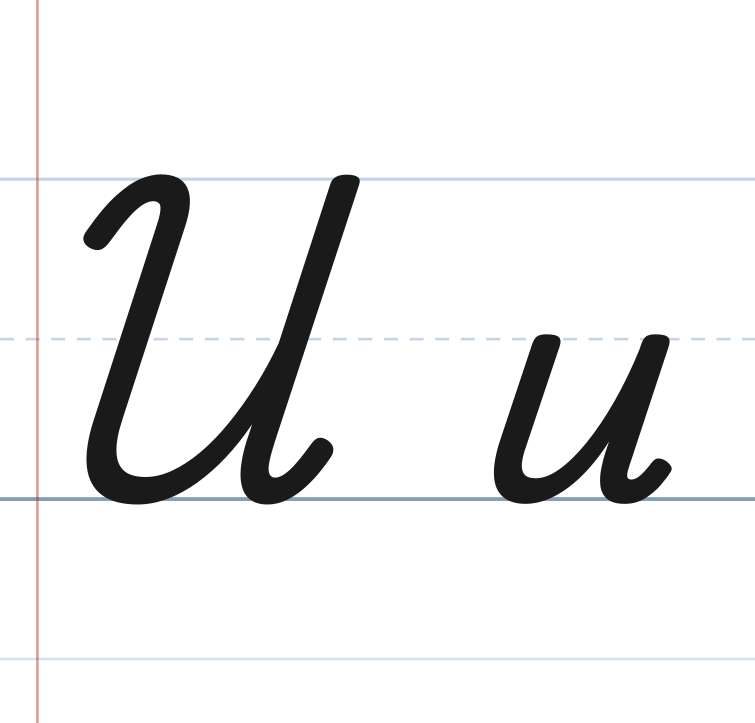
Capital U and lowercase u in traditional school cursive.
Copy and paste cursive U
Paste-ready script letters for a bio, caption, or text: 𝒰 𝓊 𝓤 𝓾. More looks in the cursive generator.
Copy box
Script
𝒰𝓊
Bold script
𝓤𝓾
Italic
𝑈𝑢
Bold italic
𝑼𝒖
This is Unicode text, not a handwriting font. It will look different in every app.
Write
How to write U in cursive
Capital U

Watch the pen. Each number appears where its step starts; the steps below match.
Capital U, step by step
- Start just below the headline with a small hook that curls up and over to the right.
- Slant down to the baseline and round the bottom into a cup.
- Climb the right side of the cup up to the headline.
- Retrace straight down the right side to the baseline, then curve up to the right into the next letter.
The whole capital U in one read
Capital U begins just below the headline with a small hook that curls up and over to the right. From the top of that hook, slant down to the baseline and round the bottom into a cup. Climb the right side of the cup all the way to the headline, so both sides stand about the same height. Now retrace: come straight back down the right side to the baseline, staying on the line you just drew. At the bottom, a short curve turns up to the right. In a word, that curve carries the pen into the next letter, so Un and Ut are written without lifting.
Lowercase u

Watch the pen. Each number appears where its step starts; the steps below match.
Lowercase u, step by step
- Start at the midline. Inside a word, the join from the previous letter arrives here.
- Slant down to the baseline, round the bottom, and swing up to a sharp point at the midline.
- Retrace down the same slant to the baseline and round the bottom again.
- Finish with a short stroke that curves up to the right.
The whole lowercase u in one read
Lowercase u is two narrow valleys that both sit on the baseline. At the start of a word, the pen begins at the midline. Slant down to the baseline, round the bottom, and swing back up to the midline. Retrace down that same slant to the baseline, round the bottom again, and finish with a short stroke that curves up to the right. The two tops are sharp points and the two bottoms are round. That is what separates u from n, which is round on top and pointed at the bottom. Inside a word, the join from the letter before arrives at the midline and becomes u's first downstroke, as in out and but.
Zaner-Bloser vs D’Nealian
Join
Joining u to other letters
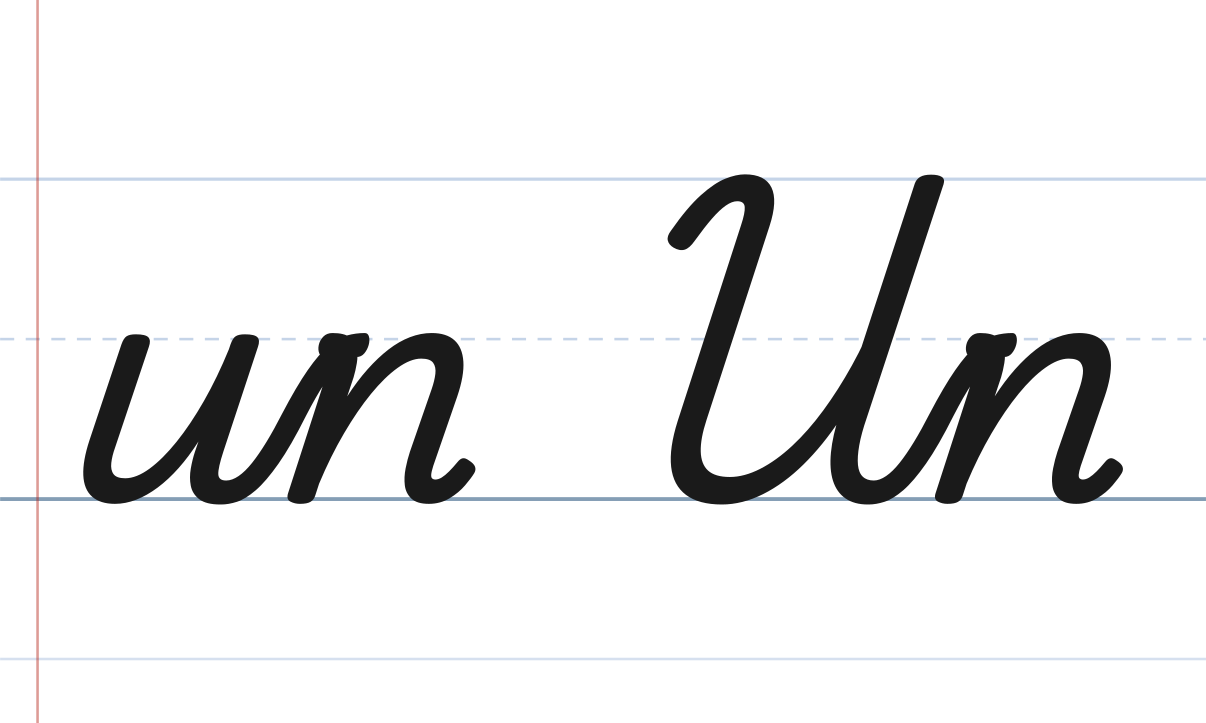
u into n
In un, u's last valley does not stop with a little flick. The exit keeps climbing from the baseline to the midline and rolls over the top into n's first hump, so the switch from pointed tops to round tops happens in one motion. n then drops to the baseline, makes its second round hump, and ends with its own short flick. The finished pair shows two sharp points followed by two round humps. If the humps come out pointed, un turns into uu.
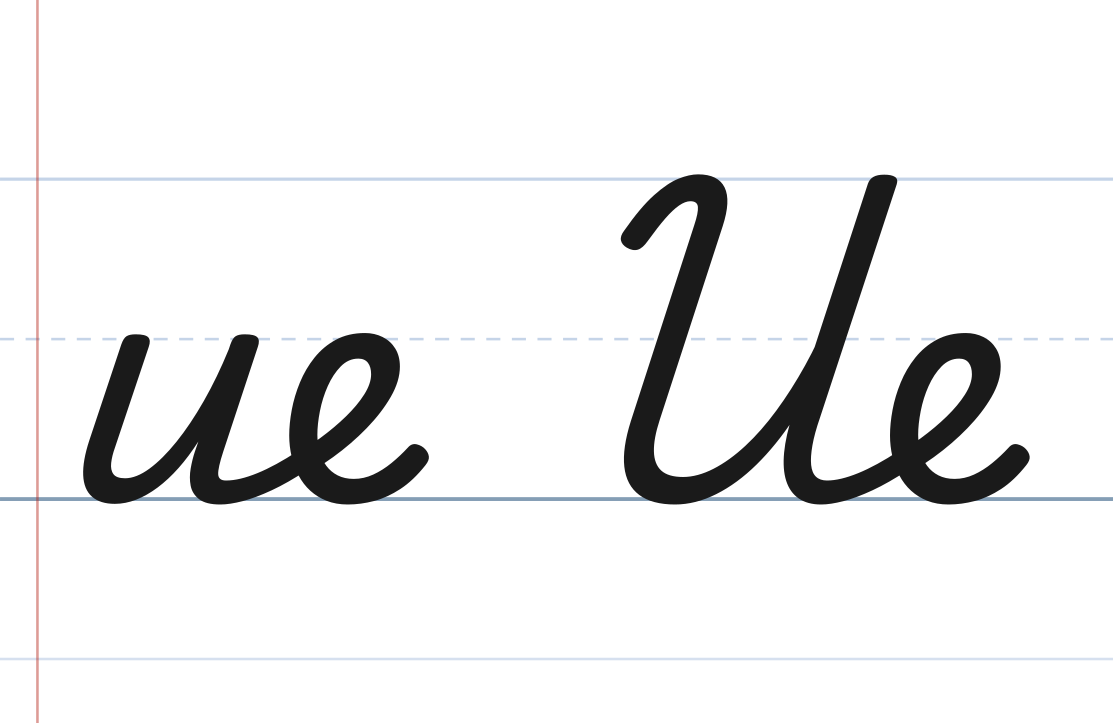
u into e
In ue, u's exit climbs only partway toward the midline before it curls back to the left to form e's loop. e is a short letter, so the top of its loop sits just under the midline, lower than the two points of u. From the loop, e comes down around to the baseline and ends with a flick. Keep the connector a gentle slope. If the loop squeezes shut into a single line, the pair reads as ui with a missing dot.
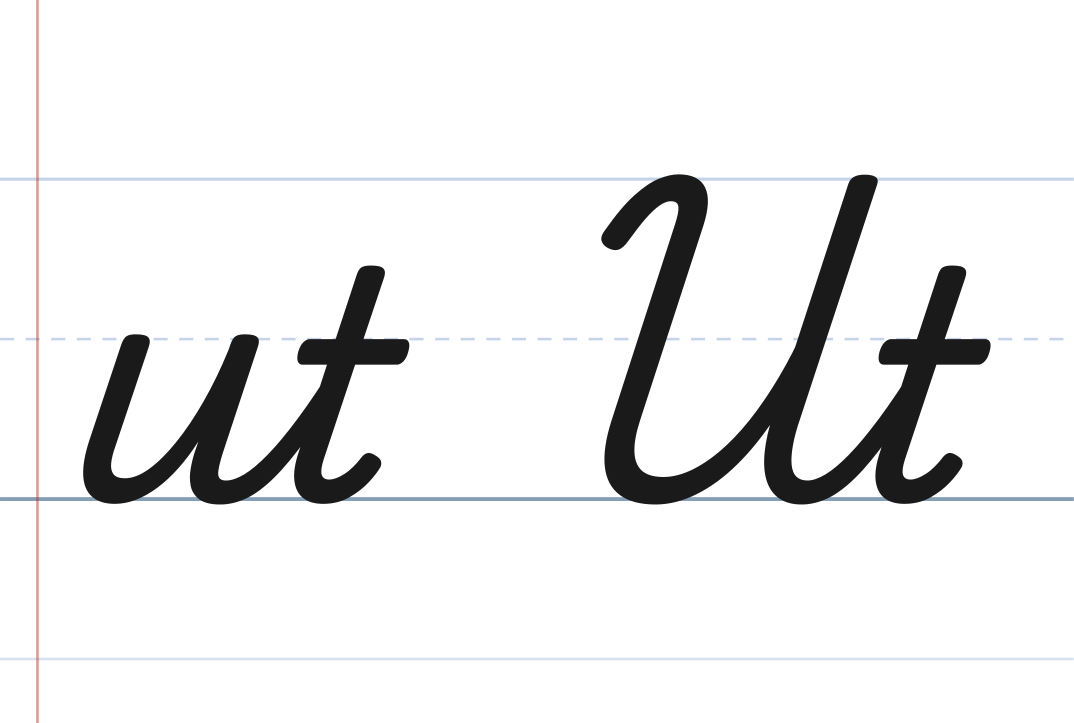
u into t
In ut, u's exit does not level off at the midline. It keeps climbing on a slant, past the midline, to the top of t, which stands about halfway up to the headline. From that point, retrace down the same line to the baseline and finish with t's small flick. Cross t with a short bar near the midline. If the exit stops at the midline, t shrinks to the height of u and the pair looks like uu or an undotted ui.
Watch for
Common cursive u mistakes
Rounding the tops turns u into n
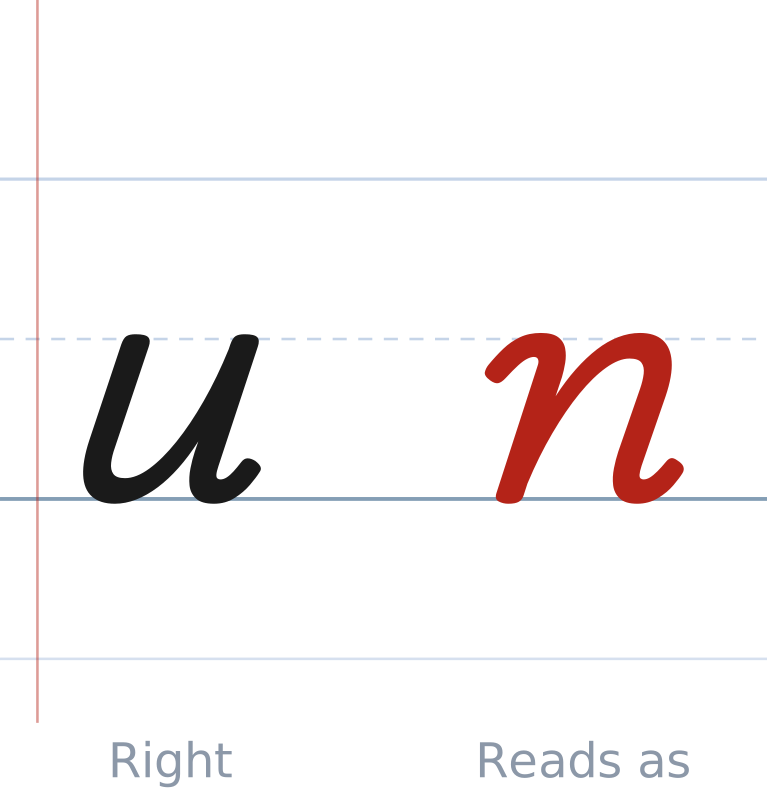
Some learners curve over the top of each stroke instead of making a sharp point at the midline. That writes n, or an upside-down u. Lowercase u has sharp points at the midline and round turns on the baseline. n is the opposite: round humps on top and sharp points on the baseline. Check the tops. If the pen turned in a curve up there, go back to a straight retrace. Writing the pair un shows both letters side by side.
Ending high turns u into v or w
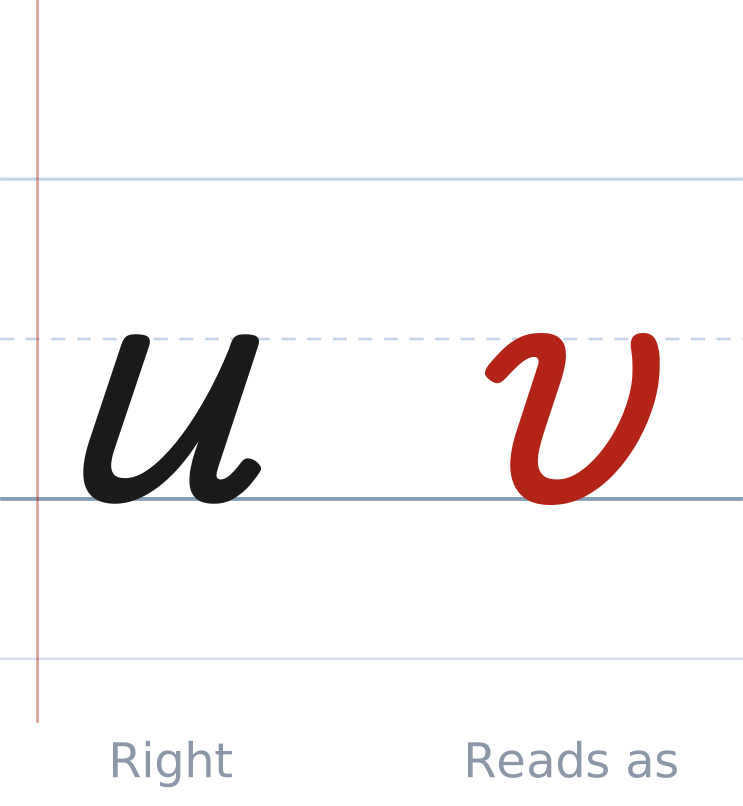
Lowercase u ends down at the baseline with a flick. v and w both end up at the midline with a small curl. If you stop after the first valley and leave from the midline, you wrote v. If you add a third point at the midline and leave from there, you wrote w. Count the points along the midline: u has exactly two, and its exit starts from the baseline. Words like sun and up are good for checking this.
Capital U that stops at the top, or keeps going
Capital U climbs to the headline and then comes back down the right side to the baseline. If you stop at the top of the right side and add a little curl, you wrote capital V, which does not join the next letter. If the right side comes back down and keeps going below the baseline into a loop, you wrote capital Y. The downstroke of U lands on the baseline and turns up to the right.
Free cursive U worksheet
Sheets use Playwrite US Trad, a traditional US school cursive.
Free, no sign-up. The PDF builds in this browser.
Practicing more than one letter? Get all 26 in the Complete Cursive Workbook, $9.
Cursive U questions
How do you write a capital U in cursive?
Capital U begins just below the headline with a small hook that curls up and over to the right. From the top of that hook, slant down to the baseline and round the bottom into a cup. Climb the right side of the cup all the way to the headline, so both sides stand about the same height.
How do you write a lowercase u in cursive?
Lowercase u is two narrow valleys that both sit on the baseline. At the start of a word, the pen begins at the midline. Slant down to the baseline, round the bottom, and swing back up to the midline.
Does cursive capital U connect to the next letter?
Yes. In traditional cursive the capital U carries its last stroke into the next lowercase letter, so a word like "Up" is written without lifting after the capital.
What is the most common mistake with cursive u?
Rounding the tops turns u into n. Some learners curve over the top of each stroke instead of making a sharp point at the midline. That writes n, or an upside-down u.
Can I copy and paste a cursive U?
Yes. The copy box on this page gives you Unicode script letters (Uu) that paste into bios, captions, and messages. They look like cursive but are a font-style symbol, not handwriting. For a printed sheet, use the free U worksheet on this page.
Is cursive u the same in Zaner-Bloser and D’Nealian?
Zaner-Bloser's inner undercurve on u (the valley between the two downstrokes) matches the letter-to-letter connectors. D'Nealian's inner undercurve does not and looks like a different stroke from the joins. Long Zaner-Bloser exits up to the midline are also what can make u look like w.