Cursive letters / A
Cursive A: capital and lowercase a
To write cursive A, start just under the headline at the top right, pull a counterclockwise oval down to the baseline and back up, then draw a straight slanted stem from the headline to the baseline and flick up to join. Lowercase a is the same move at half height: oval from the midline, stem, upturn.
Specimen
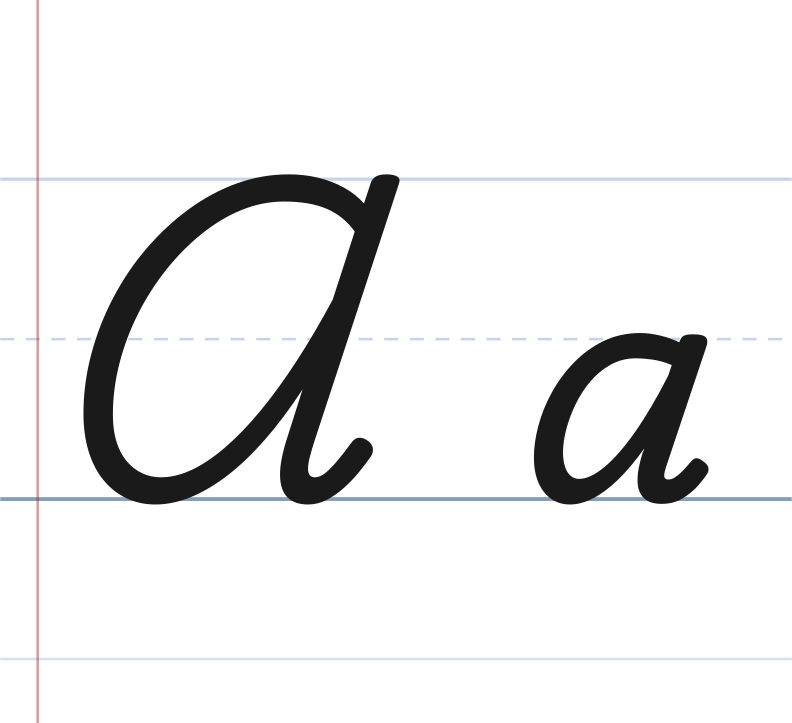
Capital A and lowercase a in traditional school cursive.
Copy and paste cursive A
Paste-ready script letters for a bio, caption, or text: 𝒜 𝒶 𝓐 𝓪. More looks in the cursive generator.
Copy box
Script
𝒜𝒶
Bold script
𝓐𝓪
Italic
𝐴𝑎
Bold italic
𝑨𝒂
This is Unicode text, not a handwriting font. It will look different in every app.
Write
How to write A in cursive
Capital A

Watch the pen. Each number appears where its step starts; the steps below match.
Capital A, step by step
- Start just under the headline at the top right of the letter. Pull left and down in a counterclockwise oval that reaches the baseline.
- Curve back up the right side and close the oval at the headline.
- Draw a straight, slanted stem from the headline down the right side of the oval to the baseline.
- Finish with a small upturn to the right. The capital joins the next letter from here.
The whole capital A in one read
In this style the capital A is not a pointed tent with a crossbar. It is a tall version of lowercase a. Put the pencil just under the headline, where the stem will be, and pull left and down in a counterclockwise oval that touches the baseline and climbs back up to the headline. From the top, draw a straight, slanted stem down the right side of the oval to the baseline. Finish with a small upturn to the right. There is no lead-in stroke from the baseline, and the capital connects to the next letter from that upturn.
Lowercase a

Watch the pen. Each number appears where its step starts; the steps below match.
Lowercase a, step by step
- Start at the midline at the top right of the oval. There is no lead-in from the baseline. Pull left and down.
- Go counterclockwise along the baseline and back up, closing the oval at the midline.
- Come straight back down the right side of the oval to the baseline. This is the stem.
- Finish with a short upturn to the right.
The whole lowercase a in one read
Lowercase a starts at the midline, not on the baseline. Begin at the top right of the oval and pull left, down to the baseline, and back up counterclockwise until the oval closes at the midline. Without lifting, come straight back down the right side of the oval to the baseline. That downstroke is the stem, and it runs along the oval's right edge rather than standing apart from it. Finish with a short upturn at the baseline that swings right. On its own the letter ends there. In a word, that upturn climbs into the next letter.
Zaner-Bloser vs D’Nealian
Join
Joining a to other letters
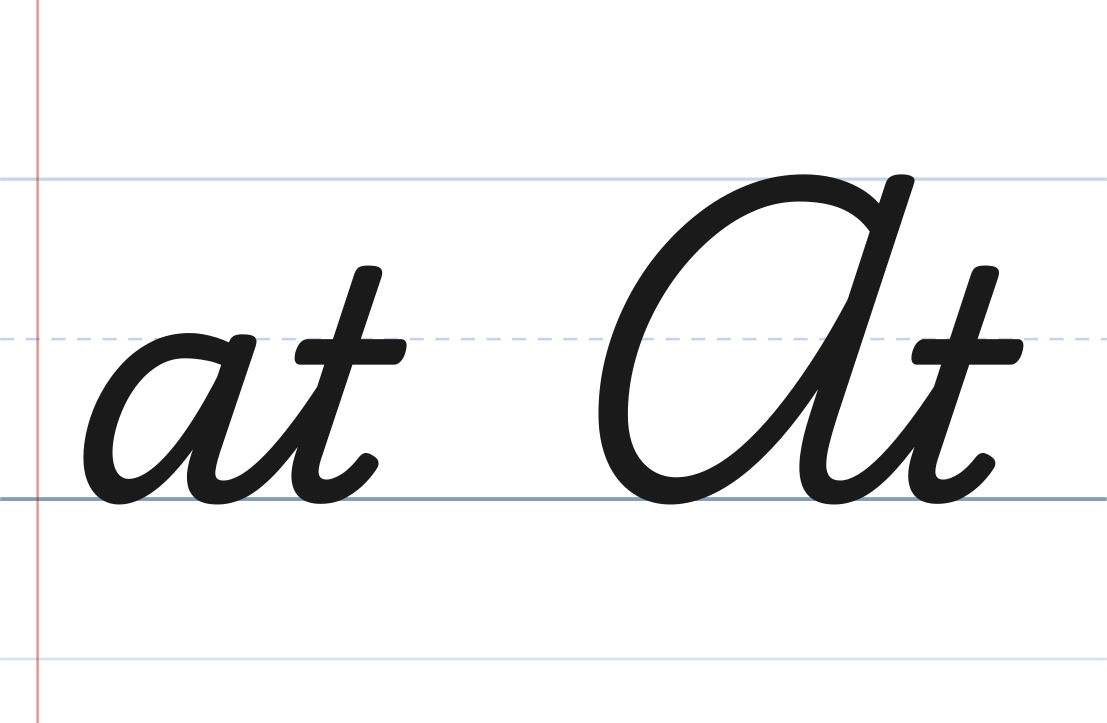
a into t
The upturn at the foot of a's stem keeps climbing, past the midline and part of the way toward the headline, and that climb becomes the up stroke of t. Come straight back down on the same line, finish t with its own small upturn, then cross it. The crossbar sits at the midline, level with the top of a's oval, so the two letters share one top edge.
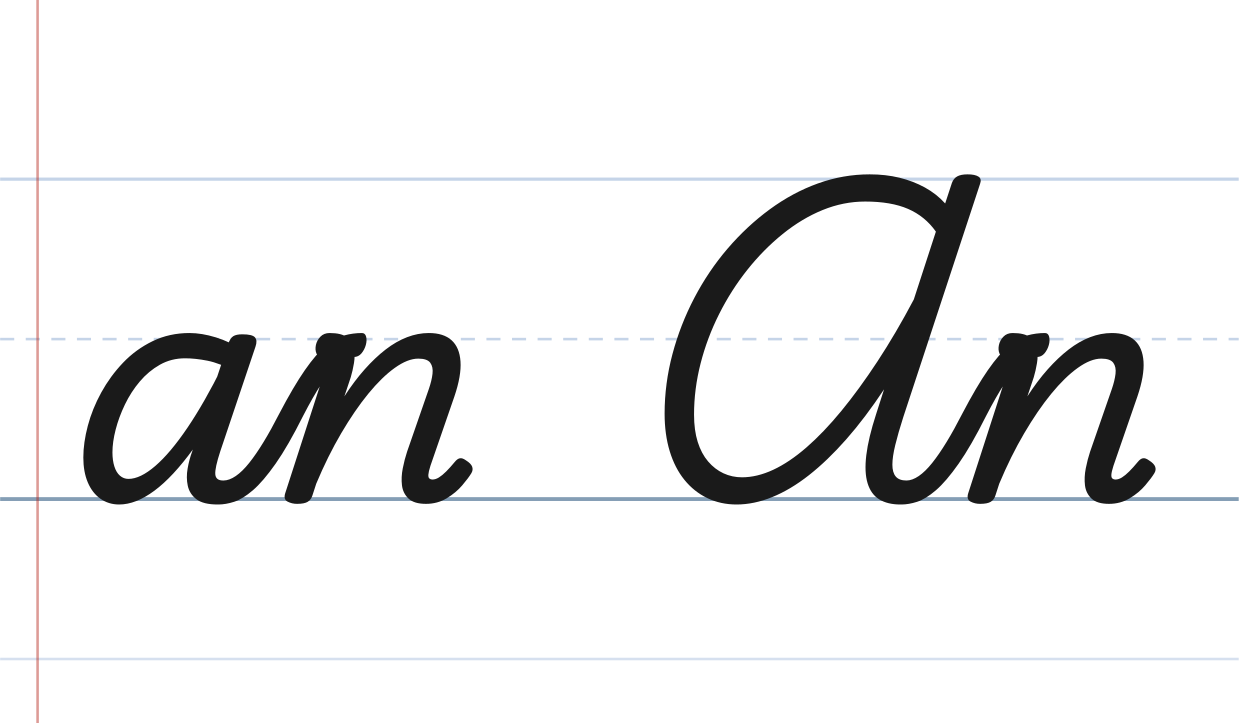
a into n
From the foot of a's stem, the upturn runs diagonally up to the midline and stops. n's first stroke comes straight back down that same line to the baseline, so the join is a climb and a retrace, not a loop. Then n rises into its single rounded hump and comes down to finish with an upturn. Add a second hump and you have written am.
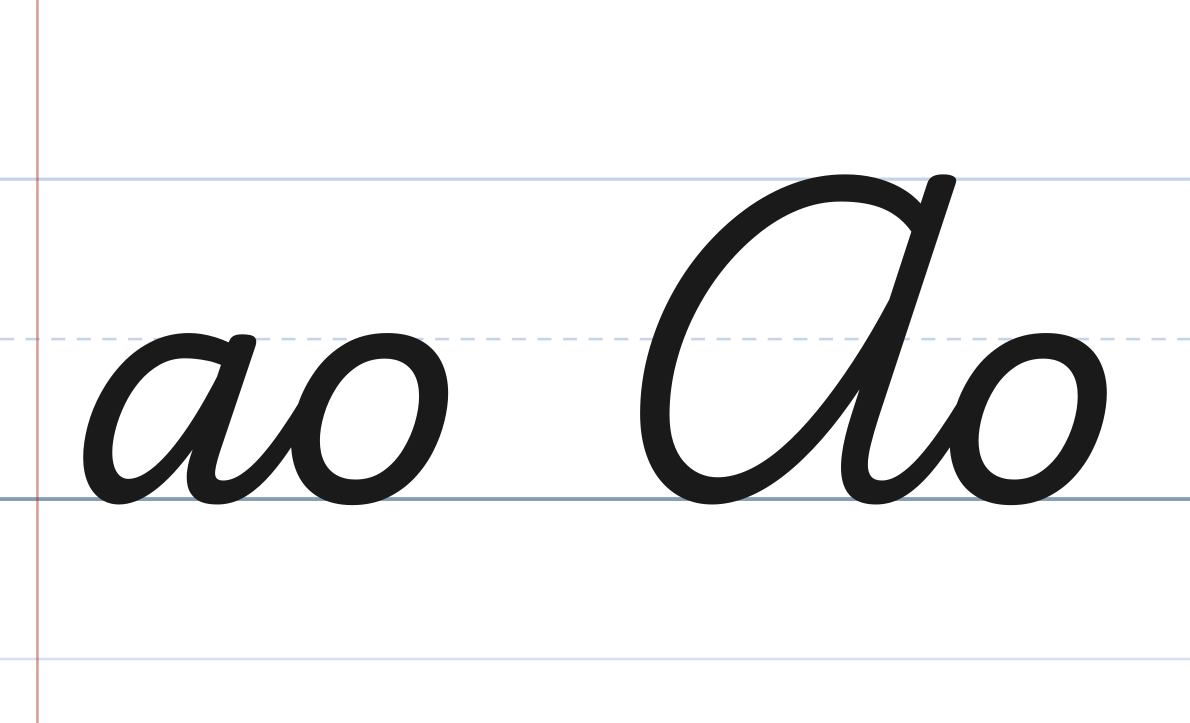
a into o
Here a's upturn barely rises. It curls up a short way and touches the lower left of o, which is a round, closed oval of its own. Start o at its top and go counterclockwise, just as you did for a, but give it no stem. Because both letters are ovals of the same size, the stem on a is the only thing that tells the pair apart.
Watch for
Common cursive a mistakes
A clockwise oval
Kids often draw the oval clockwise, starting at the top and heading right. The result is a backwards circle with a stick stuck to its side, and the stem ends up outside the oval instead of along its right edge. It tends to read as o with a stray stroke beside it. Start at the top right and pull left first, and the stem lands where it belongs.
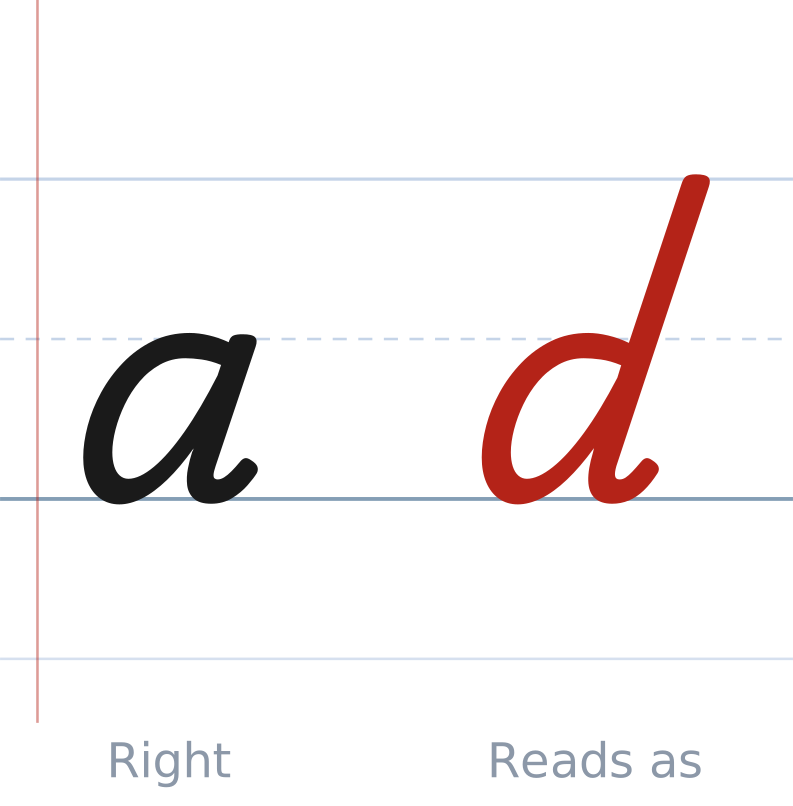
A stem that grows into d
The stem of lowercase a stops at the midline, level with the top of the oval. Run it up to the headline and the letter becomes d. This happens most in words like and, where a and d sit side by side. Compare them in that word: a's stem is as short as its oval, and d's stem is about twice as tall.
A printed capital A
Many adults reach for the printed A: two slanted legs and a crossbar. That shape does not belong in this style. The cursive capital is a round oval with a straight stem on its right, and it has no crossbar at all. A pointed A cannot join the next letter, and a bar drawn through the oval just looks like a crossed-out lowercase a.
Free cursive A worksheet
Sheets use Playwrite US Trad, a traditional US school cursive.
Free, no sign-up. The PDF builds in this browser.
Practicing more than one letter? Get all 26 in the Complete Cursive Workbook, $9.
Cursive A questions
How do you write a capital A in cursive?
In this style the capital A is not a pointed tent with a crossbar. It is a tall version of lowercase a. Put the pencil just under the headline, where the stem will be, and pull left and down in a counterclockwise oval that touches the baseline and climbs back up to the headline.
How do you write a lowercase a in cursive?
Lowercase a starts at the midline, not on the baseline. Begin at the top right of the oval and pull left, down to the baseline, and back up counterclockwise until the oval closes at the midline. Without lifting, come straight back down the right side of the oval to the baseline.
Does cursive capital A connect to the next letter?
Yes. In traditional cursive the capital A carries its last stroke into the next lowercase letter, so a word like "At" is written without lifting after the capital.
What is the most common mistake with cursive a?
A clockwise oval. Kids often draw the oval clockwise, starting at the top and heading right. The result is a backwards circle with a stick stuck to its side, and the stem ends up outside the oval instead of along its right edge.
Can I copy and paste a cursive A?
Yes. The copy box on this page gives you Unicode script letters (Aa) that paste into bios, captions, and messages. They look like cursive but are a font-style symbol, not handwriting. For a printed sheet, use the free A worksheet on this page.
Is cursive a the same in Zaner-Bloser and D’Nealian?
Lowercase a: Zaner-Bloser starts at the oval with no baseline entry. D'Nealian adds a baseline entry stroke. The oval shape is otherwise nearly the same.