Cursive letters / T
Cursive T: capital and lowercase t
Cursive T is a slanted stem that curls left at the baseline, topped by a bar with a small hook on the left that runs flat along the headline. It does not join. Lowercase t is a stem from halfway above the midline down to the baseline, a small upward hook to exit, and a crossbar on the midline.
Specimen
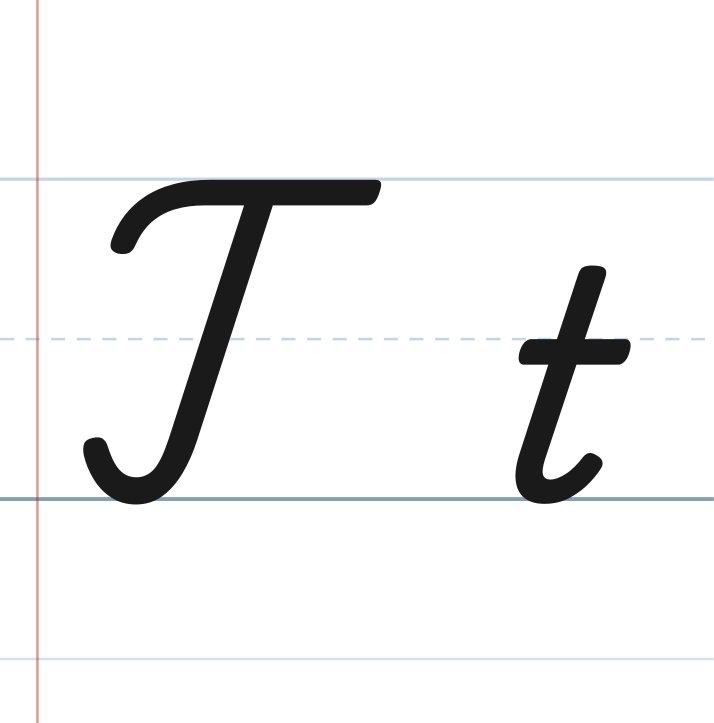
Capital T and lowercase t in traditional school cursive.
Copy and paste cursive T
Paste-ready script letters for a bio, caption, or text: 𝒯 𝓉 𝓣 𝓽. More looks in the cursive generator.
Copy box
Script
𝒯𝓉
Bold script
𝓣𝓽
Italic
𝑇𝑡
Bold italic
𝑻𝒕
This is Unicode text, not a handwriting font. It will look different in every app.
Write
How to write T in cursive
Capital T

Watch the pen. Each number appears where its step starts; the steps below match.
Capital T, step by step
- Start at the headline and slant a straight stem down to the baseline.
- Curve left and back up in a small hook that ends just above the baseline. Lift.
- Start on the left a little below the headline, curve up to it, and run a flat bar right across the top of the stem.
The whole capital T in one read
Capital T has two parts. For the stem, start at the headline and slant a straight line down to the baseline. At the bottom, curve left and back up in a small hook that ends just above the baseline. Lift. For the top, start on the left a little below the headline, curve up to the headline, and run a flat bar to the right along it. The bar crosses the top of the stem, with more of it on the right side than the left. Both ends of the letter point left, so the next letter starts on its own.
Lowercase t

Watch the pen. Each number appears where its step starts; the steps below match.
Lowercase t, step by step
- Start about halfway between the midline and the headline. Standing alone, t has no lead-in; in a word, the previous letter's exit climbs into the stem.
- Slant straight down to the baseline with no loop. Curve right and up in a small hook to exit.
- Lift and cross the stem with a short straight bar on the midline, longer on the right.
The whole lowercase t in one read
Lowercase t is short for a tall letter. Its stem starts about halfway between the midline and the headline, well below the top of letters like l or h. Standing alone, it has no lead-in, so start at the top of the stem and slant straight down to the baseline. At the bottom, curve right and up in a small hook to exit. There is no loop at the top. Lift and cross the stem with a short straight bar that sits right on the midline, reaching a bit farther to the right than to the left.
Zaner-Bloser vs D’Nealian
Join
Joining t to other letters
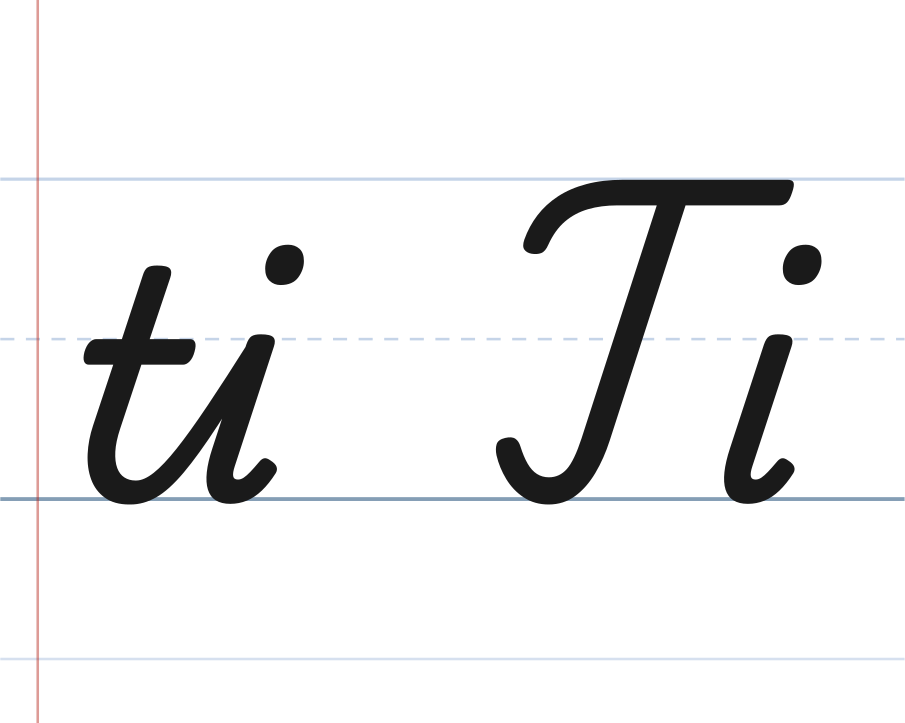
t into i
From the t hook, the exit climbs once to the midline. That point is the top of the i. Slide back down, curve up, and finish. The i reaches only the midline, while the t stem rose above it, so the two tops sit at different heights. After the word is written, dot the i and cross the t. The dot goes above the midline, and the t bar sits right on the midline.
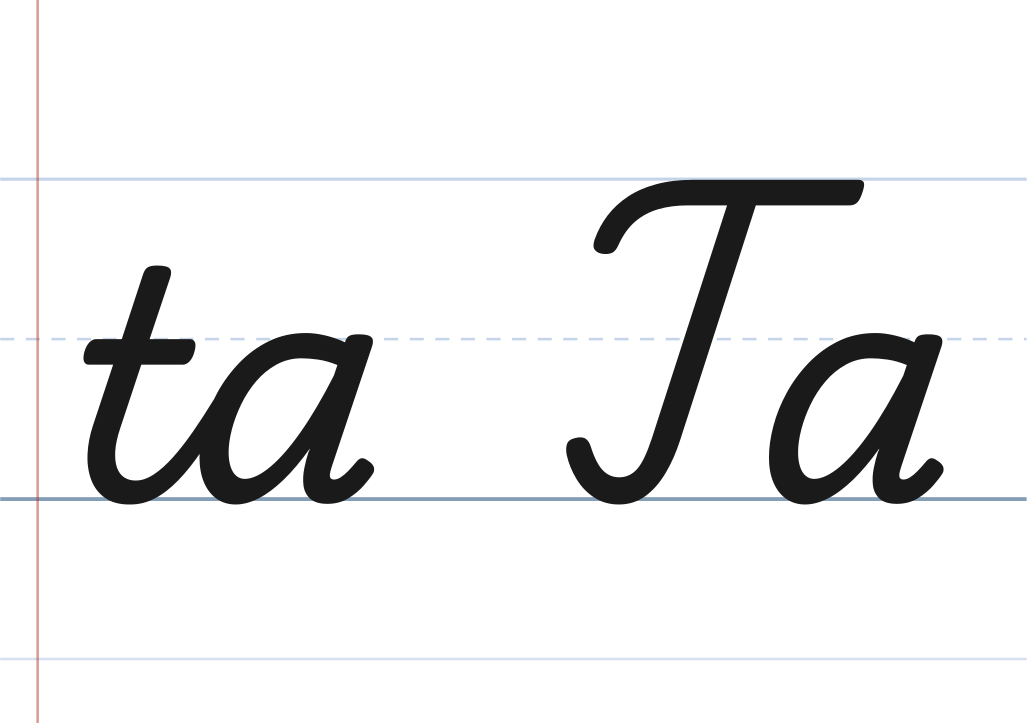
t into a
The t exit curves up out of the hook and runs into the left side of the a oval. Ride up to the top of the oval at the midline, circle counterclockwise, close the oval on the right, and pull the a stem down to the baseline. The t crossbar sits right at the height where the a closes, so keep the bar short on the right, or it will run into the top of the a.
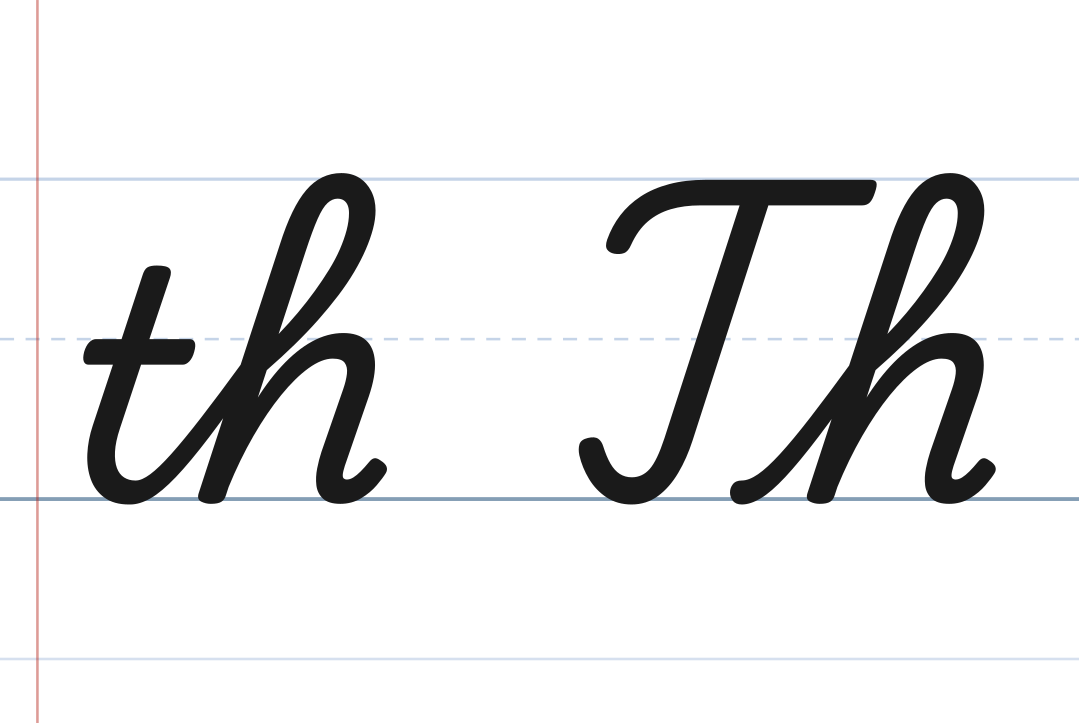
t into h
Here the t exit climbs much higher than the t itself. It sweeps up past the midline to the headline, loops left, and comes straight down as the h stem. Then go back up to make the h hump and finish. The loop of the h stands clearly taller than the t, which has no loop at all. This is the pair in the word the, so it is worth practicing on its own.
Watch for
Common cursive t mistakes
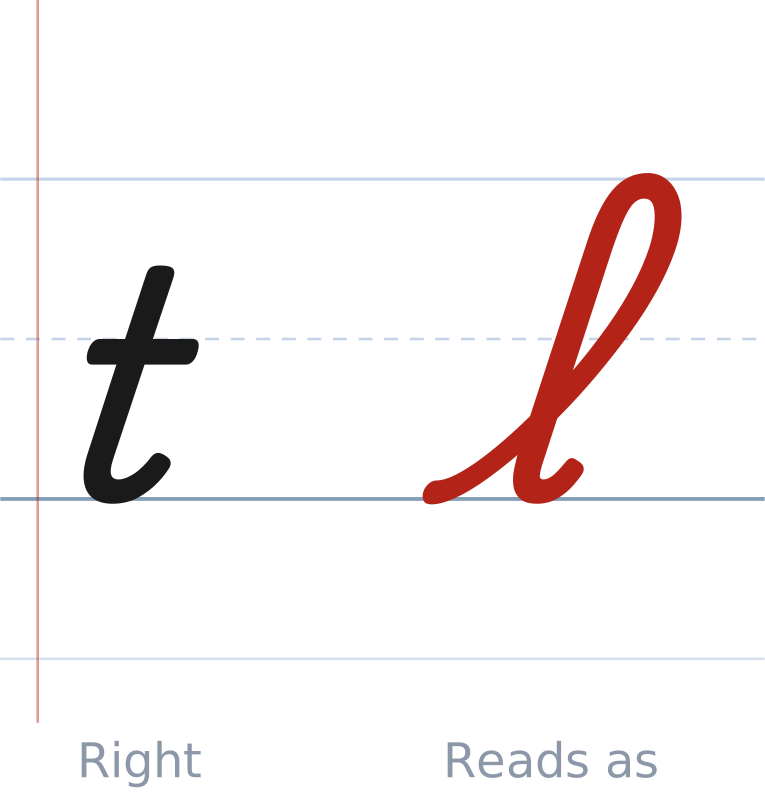
Looping the top so t becomes l
Many writers make t like l and then add a bar. That puts a loop at the top and pushes the letter up to the headline. The t stem is a single line that starts only halfway above the midline, with no loop. If your t has a loop, it reads as a crossed l, which can look like a lowercase f. Keep the t short and the stem single.
Forgetting the crossbar
Cursive t is often written inside a word and crossed at the end, and the cross is easy to skip. Without it, the short stem and hook look like the letter i without its dot, so it becomes i. In the word it, both letters need their marks: dot the i above the midline and cross the t on the midline. Check each t once the word is done.
Swinging the T hook to the right
The lowercase t hook curves right to join, so learners often do the same at the bottom of capital T. This capital hooks to the left and stops, like the bottom of a J. If you turn the stem right and run it into the next letter, the capital loses its balance under the wide top bar and starts to look like a tall lowercase t. Curl left, lift, and start the next letter fresh.
Free cursive T worksheet
Sheets use Playwrite US Trad, a traditional US school cursive.
Free, no sign-up. The PDF builds in this browser.
Practicing more than one letter? Get all 26 in the Complete Cursive Workbook, $9.
Cursive T questions
How do you write a capital T in cursive?
Capital T has two parts. For the stem, start at the headline and slant a straight line down to the baseline. At the bottom, curve left and back up in a small hook that ends just above the baseline.
How do you write a lowercase t in cursive?
Lowercase t is short for a tall letter. Its stem starts about halfway between the midline and the headline, well below the top of letters like l or h. Standing alone, it has no lead-in, so start at the top of the stem and slant straight down to the baseline.
Does cursive capital T connect to the next letter?
No. Capital T ends on its own, so lift the pen and start the next letter with its normal entry stroke.
What is the most common mistake with cursive t?
Looping the top so t becomes l. Many writers make t like l and then add a bar. That puts a loop at the top and pushes the letter up to the headline.
Can I copy and paste a cursive T?
Yes. The copy box on this page gives you Unicode script letters (Tt) that paste into bios, captions, and messages. They look like cursive but are a font-style symbol, not handwriting. For a printed sheet, use the free T worksheet on this page.
Is cursive t the same in Zaner-Bloser and D’Nealian?
School styles differ on the lowercase t crossbar: D'Nealian puts it on the midline and Zaner-Bloser puts it a little above. The t shown here is crossed on the midline, so raise the bar slightly if your class follows a Zaner-Bloser chart.