Cursive letters / Z
Cursive Z: capital and lowercase z
Capital cursive Z starts below the headline, arches up and over to the right, and swings back to a sharp turn about halfway down to the baseline. It then drops below the baseline, loops left, and rises to join the next letter. Lowercase z is the same shape at half height: a small arch, a turn, and a looped tail.
Specimen
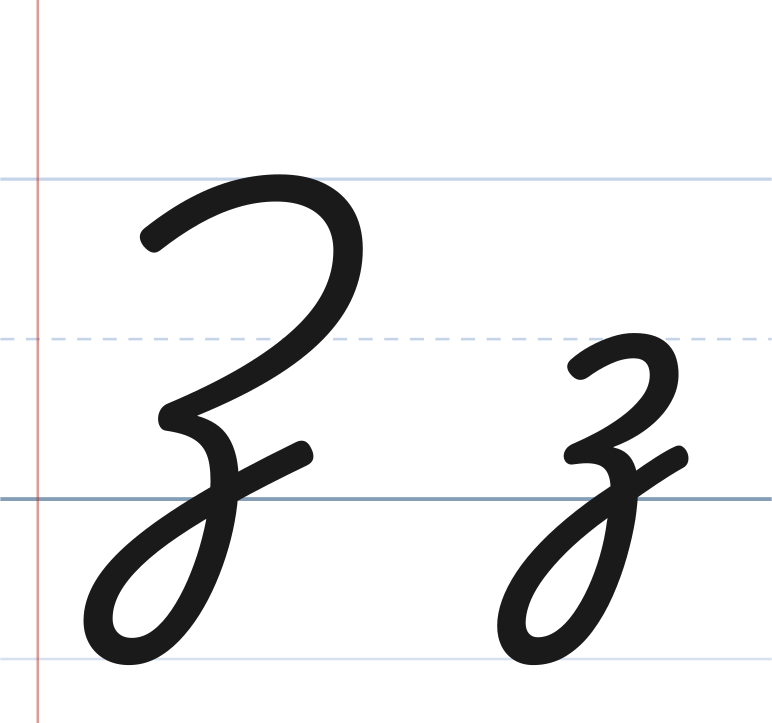
Capital Z and lowercase z in traditional school cursive.
Copy and paste cursive Z
Paste-ready script letters for a bio, caption, or text: 𝒵 𝓏 𝓩 𝔃. More looks in the cursive generator.
Copy box
Script
𝒵𝓏
Bold script
𝓩𝔃
Italic
𝑍𝑧
Bold italic
𝒁𝒛
This is Unicode text, not a handwriting font. It will look different in every app.
Write
How to write Z in cursive
Capital Z

Watch the pen. Each number appears where its step starts; the steps below match.
Capital Z, step by step
- Start on the left a little below the headline. There is no tick: the stroke runs straight into the arch.
- Arch up to the headline and over to the right, then curve back down to the left.
- Make a sharp turn about halfway between the midline and the baseline, then slant down through the baseline to the descender line.
- Loop left and back up, crossing the downstroke at the baseline, then rise to the right into the next letter.
The whole capital Z in one read
Capital Z looks more like a cursive 3 with a tail than a printed Z. Start on the left, a little below the headline, and go straight into the arch: up to the headline and over to the right, then curve back down to the left. About halfway between the midline and the baseline, make a sharp little turn, a pointed corner. From that corner, drop down on a slant through the baseline to the line below. Loop around to the left and swing back up, crossing the downstroke at the baseline. The stroke keeps rising to the right, and in Za, Zn and Ze it flows into the next letter. There is no flat top bar and no flat bottom bar.
Lowercase z

Watch the pen. Each number appears where its step starts; the steps below match.
Lowercase z, step by step
- Start a little below the midline on the left. Arch up to the midline and over to the right.
- Curve back down to the left and make a sharp turn a little above the baseline.
- Slant down through the baseline to the descender line.
- Loop left and back up, crossing the downstroke at the baseline, then rise to the right to exit.
The whole lowercase z in one read
Lowercase z is a small arch with a looped tail. At the start of a word, begin a little below the midline on the left. Arch up to the midline and over to the right, then curve back down to the left and make a sharp turn a little above the baseline. From that turn, slant down through the baseline to the descender line. Loop around to the left, come back up, and cross the downstroke at the baseline. The stroke keeps rising to the right as the exit. So the top half sits between the midline and the baseline, and the loop hangs below. Inside a word, as in size and buzz, the join from the letter before arrives at the start of the arch.
Join
Joining z to other letters
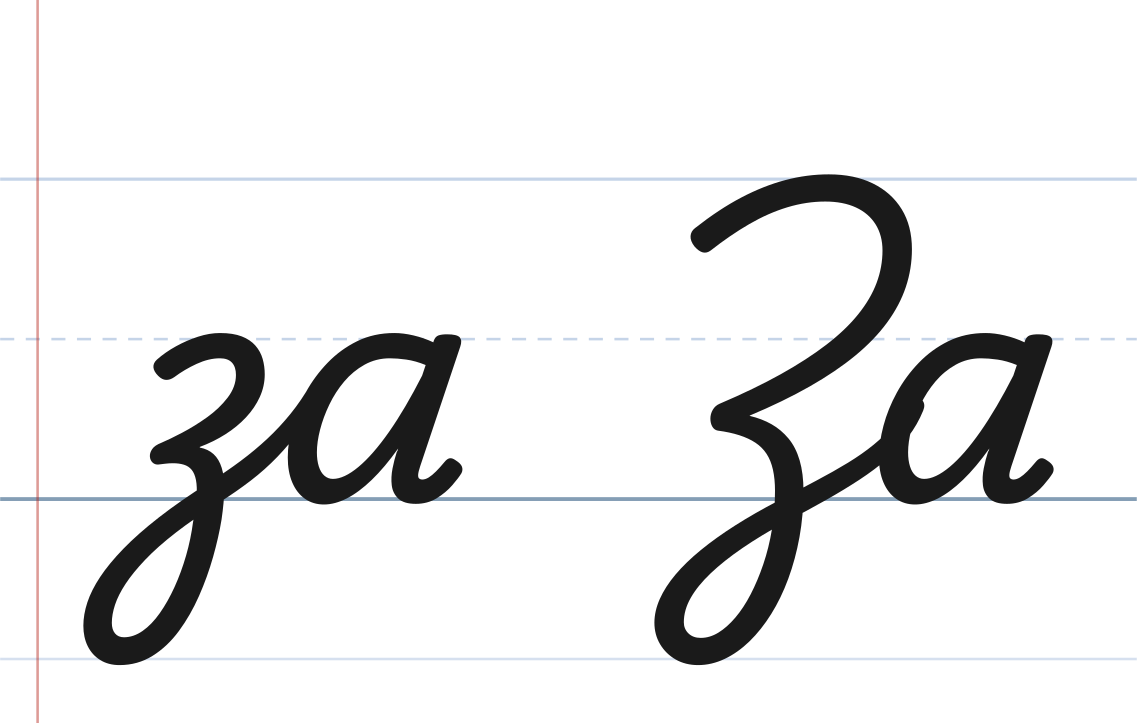
z into a
In za, the stroke coming back up out of z's loop crosses the downstroke at the baseline and sweeps into the lower left side of a's oval. The oval rounds up to the midline and closes, and then a drops its straight right side to the baseline with a flick. So the pair shows z's arch on top, its loop underneath, and then a closed oval with a stem. The connector is long and slanted because it starts deep below the line.
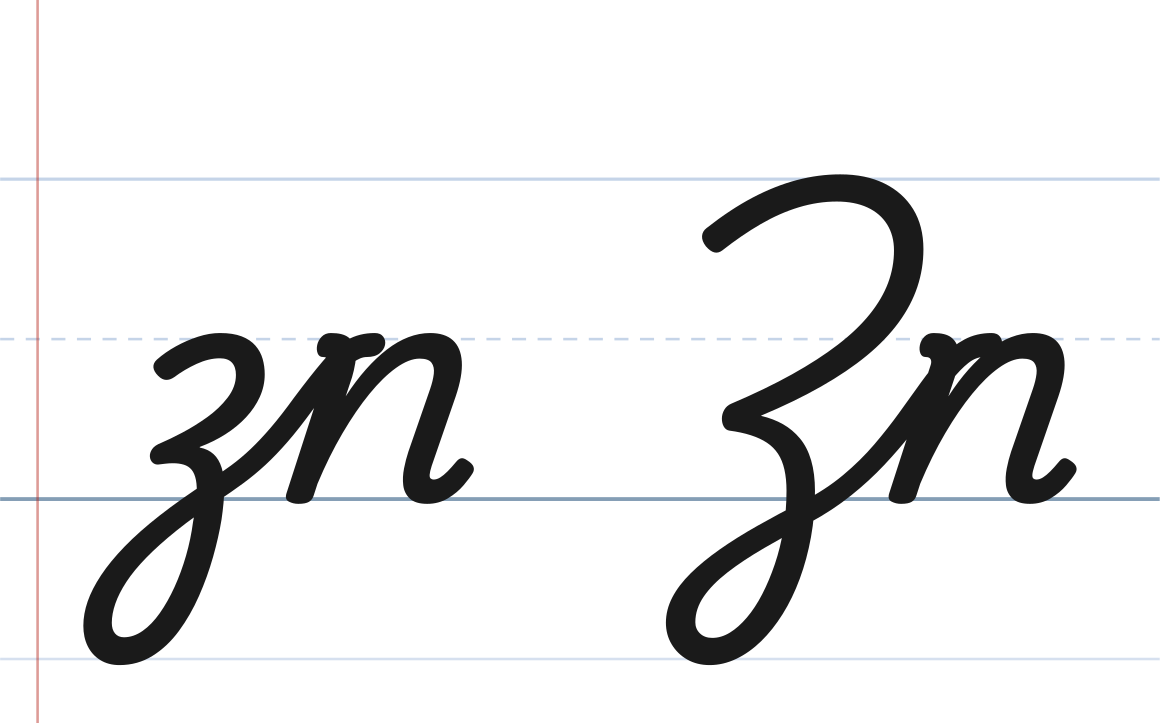
z into n
In zn, z's rising exit climbs all the way to the midline and rolls over into n's first round hump. n then drops to the baseline, makes a second hump, and ends with a flick. Both of n's downstrokes stop at the baseline. Only z goes below the line. If n's second downstroke slides under the baseline and loops, the pair turns into two z shapes, so keep n's humps sitting on the line.
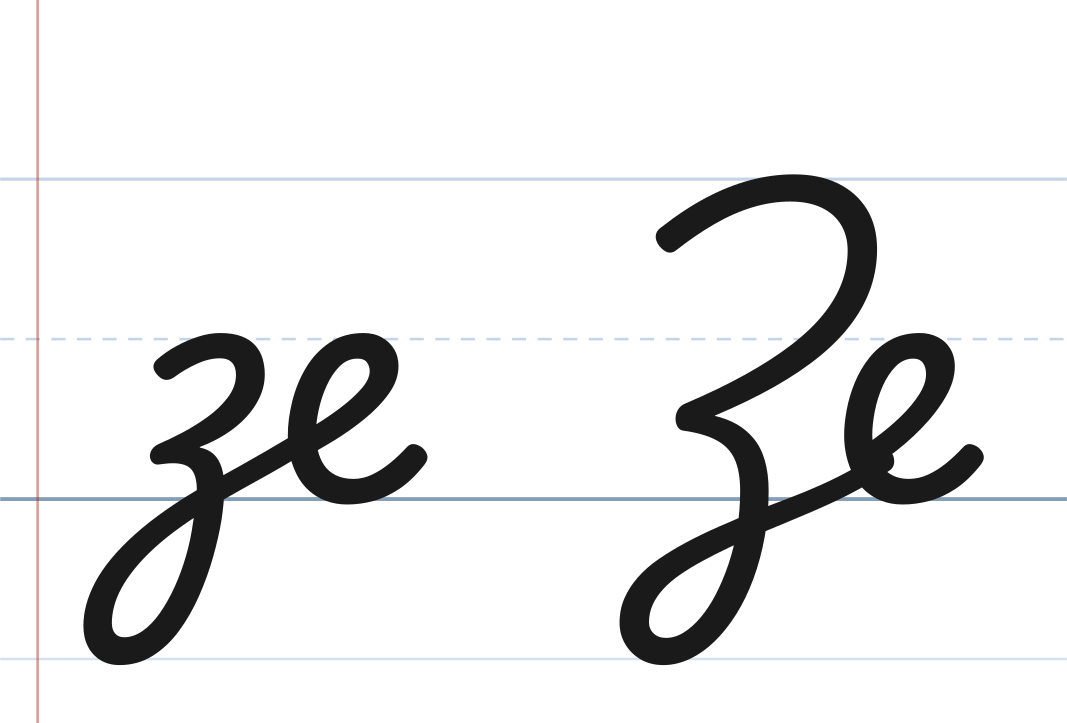
z into e
In ze, the exit from z's loop climbs only partway toward the midline and then curls back to the left to form e's small loop. e rounds down to the baseline and ends with a flick. Notice how z's arch and e's loop sit side by side at nearly the same height, with z's tail hanging below them. In zebra this join comes first, so it sets the rhythm for the whole word.
Watch for
Common cursive z mistakes
Writing a printed Z with flat bars
Many people write cursive z the way they print it: a flat top bar, a diagonal, and a flat bottom bar on the baseline. In this style there are no bars. The top is a curved arch, the middle is a sharp turn, and the bottom is a loop below the baseline. A flat bottom bar also leaves no way to join, so zebra breaks into z and ebra. Swap the bottom bar for the looped tail.
Stopping at the turn makes a 2 or a 3
The arch and the sharp turn on their own look like the top of a 3. If you stop there, or run along the baseline to the right, the letter reads as a 3 or a 2 instead of z. The tail below the baseline is what makes it a letter. After the turn, keep going down through the line and make the full loop before you move on to the next letter.
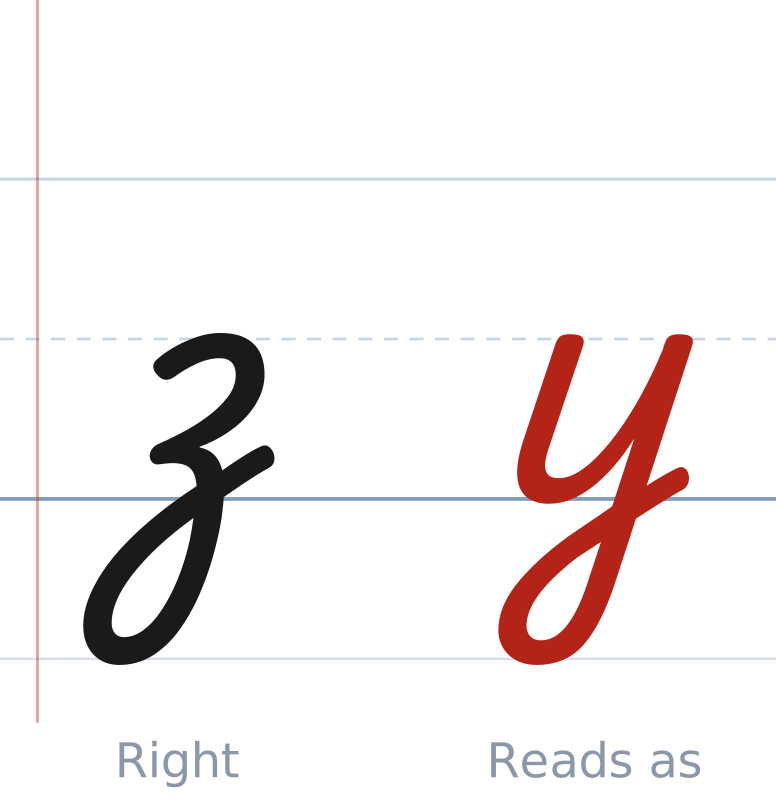
A valley on top turns z into y
Both z and y have a looped tail below the baseline, so the top half is what tells them apart. z starts with an arch that bulges up and over. y starts with a valley that dips down to the baseline and back up. If you begin z by going down first, you have written y, and size reads as siye. Start z by going up and over to the right.
Free cursive Z worksheet
Sheets use Playwrite US Trad, a traditional US school cursive.
Free, no sign-up. The PDF builds in this browser.
Practicing more than one letter? Get all 26 in the Complete Cursive Workbook, $9.
Cursive Z questions
How do you write a capital Z in cursive?
Capital Z looks more like a cursive 3 with a tail than a printed Z. Start on the left, a little below the headline, and go straight into the arch: up to the headline and over to the right, then curve back down to the left. About halfway between the midline and the baseline, make a sharp little turn, a pointed corner.
How do you write a lowercase z in cursive?
Lowercase z is a small arch with a looped tail. At the start of a word, begin a little below the midline on the left. Arch up to the midline and over to the right, then curve back down to the left and make a sharp turn a little above the baseline.
Does cursive capital Z connect to the next letter?
Yes. In traditional cursive the capital Z carries its last stroke into the next lowercase letter, so a word like "Zebra" is written without lifting after the capital.
What is the most common mistake with cursive z?
Writing a printed Z with flat bars. Many people write cursive z the way they print it: a flat top bar, a diagonal, and a flat bottom bar on the baseline. In this style there are no bars.
Can I copy and paste a cursive Z?
Yes. The copy box on this page gives you Unicode script letters (Zz) that paste into bios, captions, and messages. They look like cursive but are a font-style symbol, not handwriting. For a printed sheet, use the free Z worksheet on this page.