Cursive letters / O
Cursive O: capital and lowercase o
To write cursive O, start the capital near the headline and go counterclockwise around a tall oval, then make a small loop inside the top and finish with a short tail to the right. It does not join the next letter. Lowercase o is a small counterclockwise oval that starts and closes at the midline and leaves from the top.
Specimen
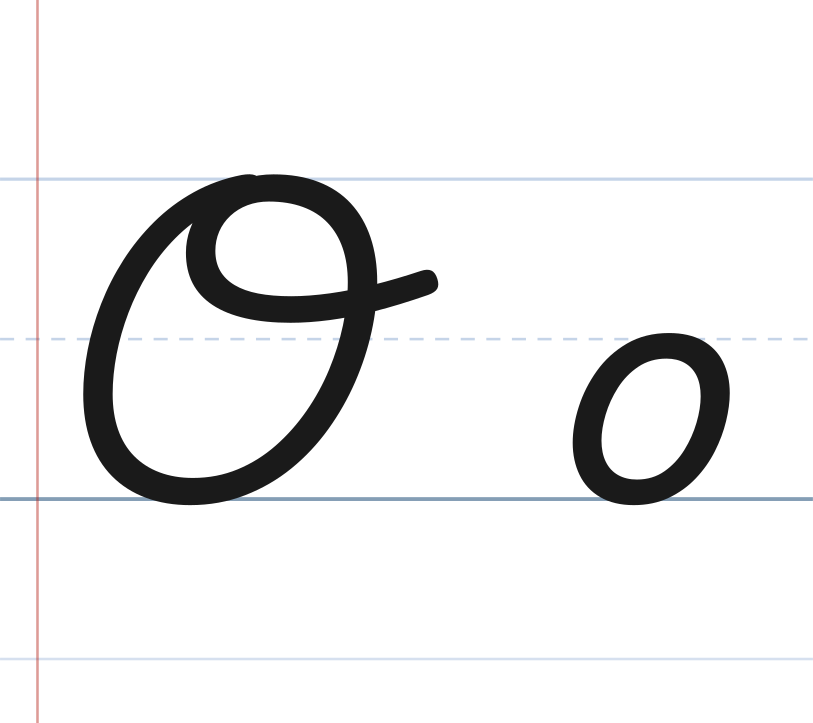
Capital O and lowercase o in traditional school cursive.
Copy and paste cursive O
Paste-ready script letters for a bio, caption, or text: 𝒪 ℴ 𝓞 𝓸. More looks in the cursive generator.
Copy box
Script
𝒪ℴ
Bold script
𝓞𝓸
Italic
𝑂𝑜
Bold italic
𝑶𝒐
This is Unicode text, not a handwriting font. It will look different in every app.
Write
How to write O in cursive
Capital O

Watch the pen. Each number appears where its step starts; the steps below match.
Capital O, step by step
- Start near the top of the letter, just under the headline.
- Go left and down counterclockwise around a tall oval, along the baseline, and back up the right side to the top.
- Make a small loop inside the top, then finish with a short tail out to the right, above the midline. Lift. Capital O does not join.
The whole capital O in one read
Capital O is a tall oval with a loop inside its top. Start near the top, just under the headline. Go left and down counterclockwise: around the left side, along the baseline, and back up the right side to the top. Before you finish, make a small loop inside the top of the oval, then carry the stroke out to the right in a short tail that crosses the right edge above the midline. Lift there. In this style, capital O does not join the next letter. The tail stays high, and the lowercase letter after it starts on its own from the baseline, as in Or and Oe.
Lowercase o

Watch the pen. Each number appears where its step starts; the steps below match.
Lowercase o, step by step
- Start at the top, at the midline. There is no lead-in from the baseline.
- Go counterclockwise: left, down around the bottom on the baseline, and back up.
- Close at the starting point. In a word, leave from the top with a short exit that stays near the midline.
The whole lowercase o in one read
Lowercase o is a small slanted oval that fills the space between the midline and the baseline. Start at the top, at the midline, and go counterclockwise: left, down around the bottom, and back up to close exactly where you began. There is no lead-in stroke from the baseline. On its own, the letter is just the closed oval. In a word, o leaves from the top with a short exit that stays up near the midline, so the next letter hangs from that high connector instead of starting down on the baseline.
Zaner-Bloser vs D’Nealian
Join
Joining o to other letters
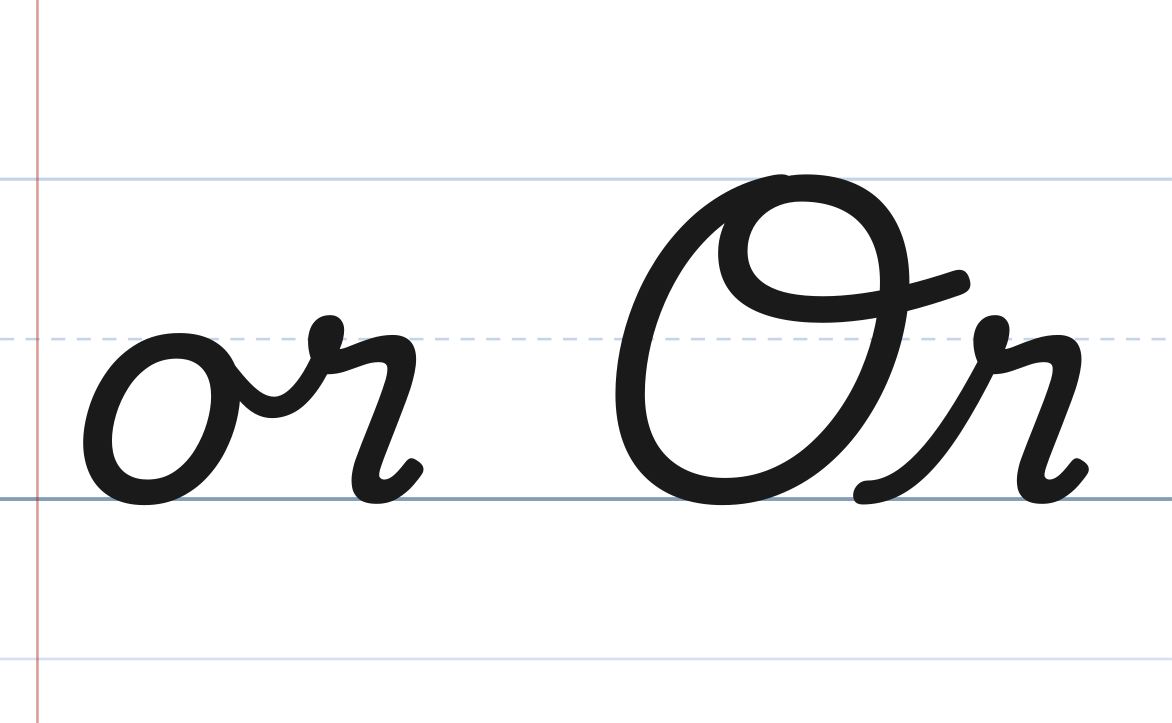
o into r
After closing the oval, o's exit leaves from the top, dips down toward the middle of the letter, then rises to r's pointed shoulder, which pokes just above the midline. From the shoulder, r makes its short step and slants down to the baseline, then exits. Nothing in this join touches the baseline until r's downstroke. Keep the shoulder sharp. If the connector runs flat along the midline, r loses its shoulder and becomes hard to read.
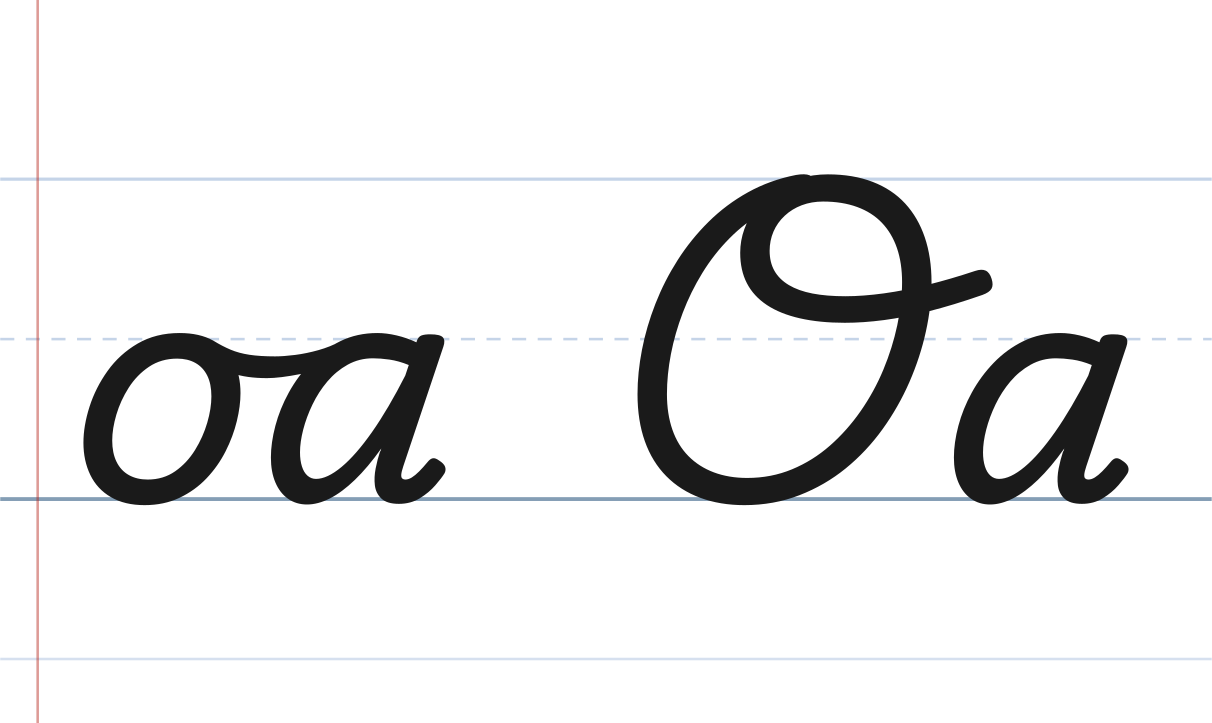
o into a
Both letters are counterclockwise ovals, and o hands off to a along the midline. o's exit runs across the top in a gentle wave and goes straight into the top of a's oval. From there, go around a counterclockwise, close it, slant down the right side, and exit at the baseline. The connector never drops toward the baseline between the two ovals. If it does, the dip and climb add an extra stroke and oa reads as oua.
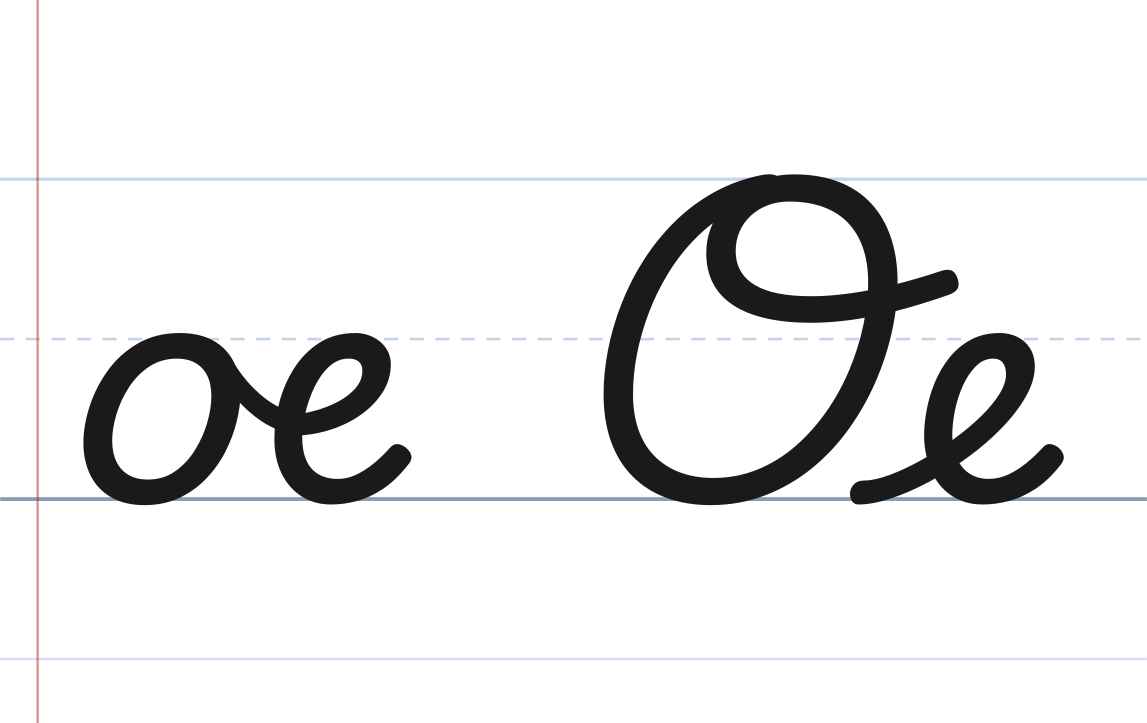
o into e
e usually starts from below, but after o it is written from the top. o's exit leaves the top of the oval and slants down to the right, then turns up and back to form e's loop, which closes at the midline. e then comes down to the baseline and exits. This downward entry into e also happens after b, v, and w. Adding a separate lead-in from the baseline breaks the pair apart and leaves a gap after o.
Watch for
Common cursive o mistakes
Going around clockwise
o belongs to the counterclockwise family with a, c, d, g, and q. Going around clockwise, from the top to the right and down, puts the end of the oval on the wrong side. The pen then has to cross back over the letter to reach the next one, and o turns into something closer to a numeral 0 with a tail. Start at the top and pull to the left first, every time.
Dropping the exit to the baseline
o exits from the top, not the bottom. If you close the oval and then slide down to the baseline before moving on, the letter picks up a baseline exit like a, and in a word like to the o is easy to mistake for an a. Keep the connector up near the midline so the next letter hangs from it. This matters most in or, where r has to start high.
Leaving the top open
The oval has to close at the top, where it started, before the exit leaves. If the stroke runs straight into the exit without meeting the starting point, the top stays open and o reads as u, or as v when the sides are pointed. In a word like onto, an open o next to n and t can turn the whole word into a string of cups. Bring the stroke all the way back before moving on.
Free cursive O worksheet
Sheets use Playwrite US Trad, a traditional US school cursive.
Free, no sign-up. The PDF builds in this browser.
Practicing more than one letter? Get all 26 in the Complete Cursive Workbook, $9.
Cursive O questions
How do you write a capital O in cursive?
Capital O is a tall oval with a loop inside its top. Start near the top, just under the headline. Go left and down counterclockwise: around the left side, along the baseline, and back up the right side to the top.
How do you write a lowercase o in cursive?
Lowercase o is a small slanted oval that fills the space between the midline and the baseline. Start at the top, at the midline, and go counterclockwise: left, down around the bottom, and back up to close exactly where you began. There is no lead-in stroke from the baseline.
Does cursive capital O connect to the next letter?
No. Capital O ends on its own, so lift the pen and start the next letter with its normal entry stroke.
What is the most common mistake with cursive o?
Going around clockwise. o belongs to the counterclockwise family with a, c, d, g, and q. Going around clockwise, from the top to the right and down, puts the end of the oval on the wrong side.
Can I copy and paste a cursive O?
Yes. The copy box on this page gives you Unicode script letters (Oo) that paste into bios, captions, and messages. They look like cursive but are a font-style symbol, not handwriting. For a printed sheet, use the free O worksheet on this page.
Is cursive o the same in Zaner-Bloser and D’Nealian?
Zaner-Bloser lowercase o starts at the oval, with no baseline entry. D'Nealian adds the baseline lead-in, then the same counterclockwise oval and top exit.